Dad Mode: Navigating Modern Fatherhood
About this episode
After both hosts welcomed baby daughters, Drs. Naqvi and Ahmed open up about modern fatherhood, comparing US paternity leave and FMLA to Canada and Europe, and the pressure on residents and new moms to return to work in four to six weeks. They talk diaper duty, the shift away from the stoic breadwinner dad, how fathers and mothers shape resilience differently, and parenting anxiety fueled by social media, sleep training debates, COVID, and information overload, plus introducing kids to adventurous eating.
What we cover in this episode
- paternity leave in the US vs Canada and Europe
- FMLA and unpaid parental leave gaps
- having a baby during residency and training
- the changing role of the modern involved dad
- how dads and moms build resilience in kids differently
- parenting anxiety from social media and sleep training
- going from zero to one vs one to two kids
- raising adventurous eaters and introducing solids
- work-life balance and being present for family
Full transcript
out of the zone of being back at work. when you've been out of it for so long. So, yeah. I don't know. >> Yeah. I mean, that's a nice nice little paternity break you had. You had six six weeks off. That's you know, >> dude. I know. It's been like the longest continuous break I've had probably in the last decade. Actually, for sure. The longest break. >> Yeah.
I took two weeks off and I was just telling someone today that that was the longest time I've taken off since probably first year of med school. >> You know, or that time between med school and residency. This was the first time I had like two weeks off in a row and it felt nice. >> Yeah. I mean, you know, in these last six weeks, I mean, so my wife uh Samia, she had her second baby, a little baby girl, Sophia. >> The funny part is that we had a we both had babies. >> Pretty crazy, right?
>> Two babies. >> I know. Backtoback days. Um, but yeah, the time off has been awesome, man. I mean really just like a lot of family time. Um just being at home, being around more often, doing, you know, like the mundane stuff, the daily routine. Um spending a lot of time with my son, um who's who's three and a half. Um and doing a lot of his school stuff. Basically stuff I never really had the opportunity to do because you're working, you get to work early before he's got to get to school.
I couldn't do the drop offs and all that. Um I missed a lot of school events and with this time off, it's been great. I I've I've enjoyed it a lot more even than I thought I would. I'm sure you feel the same way. You didn't have as much time. >> I mean, I feel the same way. I mean, I I slowed down quite a bit, right? I mean, I was working so much uh leading up to the delivery and right before we had our baby, uh I was working a lot. Uh my June, July, August were packed.
Uh um I worked longer hours, saw more patients. uh you know just always just was swamped with work and uh then we had the baby and then I took two weeks off completely. you know, we had kind of planned for that. So, I had blocked off those two weeks and I had started to like, you know, um tell my patients about it and kind of let them know, hey, this is going to happen. I'll be out for a couple of weeks. Like, don't worry. And they all were very nice. They was just, hey, take time off.
You need this. This is your time with family. And I'm glad people understand that now. You know, I'm a human being, too. Like, I need time with my family. >> No one's going to get mad at me. And everyone was super understanding. But I took two weeks off.
Even though you know you feel guilty at this time at this time especially someone like you know someone in our field you know we've been so used to just like go go go uh we have not really learned how to like slow down and take a break and kind of let the career part of our life uh just take a backseat you know we both uh have been so focused on our work and careers that that's been a priority I mean yeah family's been a priority too but we've been we've we've kind of juggled both And this was the first time after a while where uh we were able to kind of sit back, relax and you know focus a little bit on the family.
So just like you, I spent a lot of time with my son. Uh you know while the baby uh you know my wife was obviously you know more busy with the baby and uh h having to spend more time with with her. Um, I spend a lot more time with my son, taking care of him, to picking him up from school, dropping him off at school, uh, going to the park with him, uh, and then feeding him, putting him to bed. And that's mainly been my responsibility.
And even now since I've been to back to work for the past six weeks now, I've been I've been back and I'm still having to do all that. And it's kind of, you know, put things in perspective how, you know, uh, no matter what, I was just so much happier when, you know, I was just spending more time with my son and more time with my family. It just felt happy and felt more like more settled versus, you know, when I used to just go go go in terms of work. >> Yeah.
I, you know, it's like a shifting mindset, I think, in society, right? like in, you know, two generations ago, it was almost unheard of for dads to take a significant amount of time off. Um, and I think like in this regard, the US is behind a lot of other countries. I mean, even they're behind Canada, behind Europe in terms of what is accepted and even expected as a paternal time off.
Um, you know, just July 1st of this year was when my employer, Baylor, added this amount of leave, gave us six weeks for paternal leave as well. It was much less before that that's as recent as this year. You know, obviously like the federal law, FMLA permits 12 weeks of time off, but it doesn't mandate paid time off. It's just 12 weeks of time off so you don't lose your job.
Whereas, you like Canada for example, they have a built-in up to 40 weeks at I think it's like 50 I forget the exact number. It's like 50 55% salary, but you can't lose your job. So, I mean, compare 12 weeks versus 40 weeks and their 40 weeks is with at least 50% or more pay. I mean, that that's a substantial amount. It just takes not only the ability to take time off, but it takes like the stress of earning the bread and bringing in an income away from the equation, right?
It it allows you to actually be focused and be present both mentally and emotionally and time-wise with your family. I think that's a huge factor and I'm glad things are changing. I think other fields um have changed faster than medicine has. I think medicine is one of the slower ones to adopt that. I mean what do you think about that? >> I mean yeah you know bringing in a human into the life into your family it just uh it just you introduce chaos completely.
I mean things change for the past like you know four and a half years 5 years we were used to a certain rhythm. You know we had one kid and um it was the two of us and we would be taking care of him and we had a rhythm. We would take turns uh putting him to bed or you know um feeding him dinner or spending time with him and one of us would get a chance to go out and maybe record a podcast you know but but but then but then you know you introduce a child and then it's it's just chaos.
There's so much more responsibility, so much more work and you know uh and just for other families as well. I mean thinking about families that both parents work full-time and they both have to take time off. I mean 12 weeks uh is not just enough for you know at least one parents need to be with the baby for a longer time. You know it's sad.
I mean it's a sad reality of our society that a lot of times both parents have to return back to work in 12 weeks and the baby has to be dropped off at the daycare uh at 3 months of age. And that's uh unfortunate reality of the world we're living in, right? I mean that's in in in the United States we don't have that much long of a break where I think it's necessary. I mean just just you know looking at my life and you know our situation we're we're privileged.
I we have the resources to probably have a nanny and u have help. I have my family in town. Things are easy but still things are harder like they're they're much harder now. And it's taking time for us to settle in in this new routines.
I can only think of uh someone who's maybe a single parent bringing a kid into the live into the world and now they can only take 12 weeks off and in 12 weeks they have to think about uh what where they're going to put the kid in, what daycare, maybe they're on the wait list, they have to drop them off uh at a place where they're worried about the kid getting sick and they can't really take too much time off because they've already used up their FMLA. So, it it's tough.
uh you know and uh I I wish things were different but they're not. >> Yeah. There there's almost like no spare capacity, right? If anything goes wrong or anything doesn't go according to plan like you mentioned. What if your little baby who you drop off in daycare gets sick? You can't send them in daycare if they got a fever or something like that. They got to stay home. You got to take time off work and you have your a lotment of blank amount of hours or time that you've acred off.
If you exceed that, do you not get paid now? Could your job be at risk? Right? I mean that question is really hard to answer. There's not really a good plan and people just kind of hope it doesn't happen. That's a very tough situation to be in. I I really feel for a lot of people that are like that. Um >> which kind of let's go back to residency, right?
Remember remember in residency I mean there were people that had babies in residency and there were that women had uh you know girls in our class that had babies during residency or fellowship and uh they could only take like four six four to six weeks off because it's affecting the training as well. It's not just about how much time they're allowed to have off, but it's also they might have to delay a year of graduation because they might if they miss up to three months of training.
That's a lot of O time, a lot of cat lab time, a lot of clinic time that they lose out on and it's not enough to make up for their hours. So in medicine, it's even tougher now because especially for women who are in residency, who are in fellowship who cannot take uh you know afford to miss that much time because it affects their training. Now they have to take time off. Um and a lot of them were forced to come back within 4 weeks. I mean, can you imagine uh a mom giving birth back in four weeks?
>> But you know, you know, that's like I mean, I can't speak on every country in the world, but like it's almost seems like a uniquely American issue in terms of the residency um and having a baby because like the two of their main health systems that I've been exposed to in my training like in Norway and in Australia, the whole mindset was different of the training program and of the woman who herself was pregnant.
And then in the postpartum period, it was very accepted and very common to like take extra time if you needed it. I mean, there was one I remember one resident when I was in Norway as a medical student, one of the residents, the orthopedic resident, she had taken 18 months off and it wasn't like a big deal. It wasn't seen as odd or out of the ordinary. The resident, the other co-residents knew it. Everyone was accommodated. They adjusted the call schedule, the rotation schedule.
All of the attending surgeons over there were understanding of it and she came back and just started kind of where she left off.
I mean obviously that 18 months you would still have to do the training but it wasn't in their mind you know this like urgency like oh my gosh I have to finish the residency it's 5 years I must finish in 5 years I mean you had a child if you need longer you need longer you know what I mean it it's and Australia was very similar whereas here like yeah I mean even the residents that I train and work with in our program we had quite a few just recently in the last year or so that have had babies and they all within six weeks they've been right back at it.
And I mean, they're like, you know, in like the resident lounge, in like the O workroom right next to the OS in between cases, they're like pumping for a few minutes here and there, putting it into the fridge, and going back, doing a surgery, coming back, pumping some more. I mean, they're exhausted. They're not spending that time with their baby. It's tough for sure. And I talk to them about it.
I mean, they're they're very stressed and they're there's just not a good option because it's that mindset like, oh my gosh, we got to finish. We got to finish. And you know that has some weight, right? Like you've been in this process for so long, you just want to be done. You don't want to be resonant forever. Um so I mean I'm not saying that you know the foreign systems I mentioned are better. It's just very different different mindset.
I mean in in America we're always in a race to just get somewhere or be somewhere, right? We've never really step back and look at where we are currently. Even, you know, as a as a guy in medicine, me and you're both building our practices in the sense that, you know, we're we're kind of establishing ourselves at this point, taking time off to kind of step back.
It's kind of looked down upon a little bit, you know, it's just like, hey, like, you know, are you really going to just not come to the hospital anymore? you're going to take. It's not from maybe not from our generation but from the generation before us sometimes where you do feel uh a little judged where oh he's going to take six weeks off or or 3 months off. Wow. Like you know it's u you know in back in our day we took we took no time off.
I I had a baby uh one day and next day I was in the hospital rounding and that's kind of was the mindset of the of the generation before us. But uh you know it's I think it's very important when your family is going through such a change. Your wife needs your support. I mean yeah she might have her own family around but there's no other support like her own husband. Like your your kid, your older kid might need your support. They want you to be around. They need to see a familiar face.
They don't want to be with grandparents or with a nanny or at the at the at the you know daycare. They want to be with their dad or with their mom. And I think being there, that's an important part of manhood now, right? You know, being there for your family, being a provider, but also being there in times of times of change like this. It's very important.
So, I think there's a shift in mindset in our in our generation where our our millennial dads uh or, you know, Gen Z dads are more and more uh there and available for these kind of situations too rather than just being the providers. >> Oh, for sure. You know, it's funny like one of my favorite attendings in residency, we were just talking about this like, you know, when we were all residents and when I was a resident, I was married, but we didn't have any kids at the time.
And he like was very proudly telling us, he was probably at the time in like his early 50s or so. Um, and he was saying that when he had his first kid, he was a resident and proudly he was like, my wife was going into labor and he was like, I was doing a surgery. And so I finished the surgery, went with into the labor room, you know, she delivered and all that.
And he's like, "Then I went back and scrubbed into another case." And I was like, "So the day your wife delivered your first child, you didn't even stick around to like hold the baby for longer, like sit next to your wife." I mean, like any of that wasn't the boom boom. It's like a sense of pride almost like um as if it's like a badge of honor that I made this sacrifice or I suffered.
I mean you did but so did your wife like and you missed out that time with your kid and you know like that mindset of like I just need to be the stable bread winner I need to be stoic and all this stuff I mean there's a sense of stability in the home too and like a familial stability not just in terms of a financial stability that you provide right I think that is also changing a lot it it's important to have not just a single parent that is the household and the stable one in the household and the man just goes out, earns money, comes back in the evening at dinner time like that.
I that's changed. It's already changed a lot and I'm really happy it's changed a lot. >> Yeah. I mean, there was always an idea in in the in the generation before where uh you know, the dad has worked hard all day. He's coming home.
let's make sure the house is clean, make sure we're not too noisy for the dad or, you know, uh let's let's make sure that he's comfortable or and and there's these the there's these situations if you I mean, you know, maybe it was not like that in our families or but men in those generations would come home, they would watch TV, they would spend their time, maybe uh you know, want would want quiet time, read the newspaper and sometimes the kids were expected to leave them alone or be quiet or keep keep noise down and and that the the father figure was always that that scary uh man that mom married you know that provides uh provides the uh the groceries and the money for the groceries.
But you know uh when the dads left the house in those days the the tension eased a little bit and that's kind of the stereotype you see from the previous generation maybe or maybe not so true in all households. In some households that was the case. I mean it's definitely the case when we watch older movies or older shows, you know. >> Yeah. It's like some things set in the Great Depression times. >> Yeah. Yeah. But you know that's changed a lot over time and I think it's a good change.
I mean, I think dads uh being there putting their kids to bed, um giving them dinner, you know, showing them that it's okay to like prepare dinner for the whole family and cooking or um you know, um going going go ride going to ride bikes with the kids and uh you know and just being playing that role of being the fun person in the house as well. Uh and the easygoing person in the house as well.
I mean, yeah, when you need to discipline, you discipline, but I think it's very important for the kids to feel secure in the house with both parents and not just uh have the mom the one they go to all the time for all the comfort and dad be the one that they're scared of, right? So, I think it's a nice change uh in a lot of the attitudes of the more recent dads and we're much more involved in our kids' lives. I mean, I I'm the sole diaper changer in our family right now. Yeah.
And and and I know like uh many men from the generation before us uh did not change any diapers. I I get that. >> You know, I I just have always found that funny. I mean, like it's not that big of a deal. It's like it just it's really easy to do. And like I kind of like changing my kid's diaper because like I'm keeping my child clean. Like I want them to be clean. I don't want him in a dirty diaper, you know, like Sammy and I both change the diapers. We don't really fuss about it.
I mean, whoever happens to be holding the kid when it's like, "Oh, they need a diaper changes. Go do it. It takes like 5 seconds." But you're right. I mean, so many dudes, like I don't know, our dad's generation, even older, they very proudly are like, "I never changed a diaper." I was like, I mean, like, why not? It's not that big of a deal. >> Yeah. It's quick and it's it, you know, it's it doesn't take that much time. I think changing the diaper becomes this becomes this uh big deal.
Oh yeah, you'll have to change so many diapers. I mean, it takes like literally less than two minutes to change a diaper. I don't I don't mind doing that. At least I'm I'm not the one who has to like, you know, um pump or or breastfeed the baby. That's you know, we we have we have it easy compared to the moms who have to recover recover from delivery, recover from a C-section or whatever and then also be responsible for feeding the baby as well. uh you know a lot of times.
So it's it's it's a nice mindset but you know it it's kind of you sometimes realize you know when you take times off like this where you were working working working and then you stop initially I felt kind of anxious about it you know hey I'm building this practice and now all the momentum I had of building and growing this practice you know it's kind of dying like you know maybe maybe it'll it'll get affected maybe the new patients that I was getting constantly and the and the doctors that were referring to me now they're going to feel that I'm not as available.
maybe my practice will stop growing or you know patients will get pissed off. But in the end you realize you know it's it's just such a small blip in your whole career span. You just because you're taking some time to uh be human, be the dad, be with your family does not mean your career will get affected, things will get stalled.
It's you know in the big span of things like you know 20 30 years you'll remember that time that you spent with your family rather than time you spent uh working all days. Um, yeah, maybe my practice may take a little hit. Uh, maybe the the revenue that I generate or the amount I build this month or next month or even for the rest of the year is much much lower than what I was doing before, maybe I'll le make less money.
Uh, but I know that when when time comes and when I need to get back, I'll I'll hopefully be able to kind of start working hard again and have that time focus on the business. But right now, my family needs me and that's where I need to be.
So I think we need to kind of start uh developing that mindset where sometime it's okay to take a back seat uh and for those of us who have been so high functioning highrung focus on that career sometime it's okay to step back focus on the family focus on career focus on life focus on yourself and your mental health as well to recover uh and kind of it reframes things right and you come you come back better you come back more rested >> for I mean, it's almost like a in a little different way.
It's kind of like a vacation, right? It's like a little mental reset. You take some time off, time away. You break away from the routine, think about different things, do different things. It like freshens you. Um, it has for me. I mean, for sure. Um, it's been awesome. Like I, you know, I think having like that different perspective is great.
I um I was watching this like random documentary um about like astronauts and one of the astronauts they were interviewing for this documentary they were talking about just like what does it feel like when you're on the moon compared to like life on earth you know that's what you've known the only thing any of us have known and now you're standing on the moon and he was the astronaut is talking he was like you know it really puts in true perspective more than anything I've experienced in my life when you stand on the moon and you look back at the earth and you put your arm out at arms length and put your thumb up.
Your thumb nail completely covers the entire earth. You can't even see the earth anymore. And he's like, I realized in that moment how absolutely insignificant of a speck we are and how all of our problems, all of our issues, all of our stresses, it's covered up just by that. And the universe is so vast. He was like, it's crazy how in a way kind of pathetic all the issues we create are if you think of it in that way.
And he's like, "So, you just can't let anything stop you from doing what makes you happy." And that like it kind of resonated with me a lot because I happen to watch that like, you know, now when I have time off and all of this family time that like life is fleeting and you're never going to get back these moments with your family when your kids are little, you think, "Oh, I just missed a parent teacher conference. I missed a soccer game here." Whatever.
But those pile up and those really are the moments that give life its flavor. And if you keep missing them, you keep like, "Oh my gosh, I just got to work. I just got to make more money. I just got to see more patients. This and that. That never ends. I mean, you could do that forever. But it's like it's that I don't know. It's just that thing that gives you real zest in life for however long we have. It's it's your family. It's your connections, right?
That I I thought that was an awesome like way to frame that. How that guy talk about >> Yeah. I mean, if you think about it, you know, uh you know, as your kids grow, you have less and less time with them. You know, there's only uh you know, with my son being almost five, I only have like maybe seven or eight more years when he wants to hang out with me. >> Too cool for you real soon, >> right? I mean he he probably wouldn't want to hang out with me after when he's 13 or 14.
He probably would want to go hang out with his friends or uh or other people rather than me because you know parents become uncool at a certain age which is normal which is normal part of growing up which I think it's it's necessary to think of your parents as uncool and then kind of explore other things and other avenues and and kind of build a different personalities outside of your parents household.
So you but you only have seven 8 n 10 more years with your kids uh where you want to cherish those moments, right? And and every you know um every older cardiologist that I've talked to recently uh who who've been practicing for 25 years, 30 years. I interact with them a lot.
A lot of people I work with are much older than me or I see at the hospital and every every time I talk to them and all all they say is hey you know um one advice I would give you is the work will always be there focus on your family you know spend time with your kids cuz one regret I have is I did not spend as much time with my kids and now they've all grown up they've gone to college and they have their own lives and now I wish I had those days back right I mean you can now once you know we'll be we'll be relatively young when they're grown up and they're gone to maybe college or or in high school and maybe at that time they won't want to spend as much time with us and we can work as hard and as much as we want at that time because maybe that's all we'd want to do.
Uh but right now they're young, they want us, they want they they love spending time with us. They get excited when they see us. Uh so these are the years to spend time with your kids, right? These are the times when you come and you know take your kid out uh go go you know have them ride the bicycle and run with them and play with them.
Um and this is not the time to come home and just uh you know just be worried about working finishing up notes or going to round more and see extra patients and do moonlighting shifts or whatever at night time. I know a lot of people are doing that. A lot of people just want to make that extra money and money and money, you know, uh money um you know, as a physician and we're in a privileged position, right? Money, uh is uh everyone wants more money, but money will never be enough, right?
You can keep working and there's always going to be that more money you can make. You can make that extra $2,000, extra $3,000, extra $50,000. We're always going to want more. But at some point, you have to tell yourself, "This is it. This is where I draw the line. I want to spend this time with my kids instead of making the pursuit of uh you know more money. >> No, for sure man. And even you know even like switching gears a bit like talking about actual like parenting and stuff.
I mean both parents being around if possible has a huge impact. I mean in developing resilience in kids in the type of play and that that's been studied. I mean there's so many books about one that uh Sami and I are reading right now. It's called Tiny Humans Big Emotions. There's a lot of research on this that the way the kids often in default play with their dads versus with their mothers is different, right?
In terms of rough play, you know, wrestling, that kind of stuff, emotional play, imaginative play, all this kind of stuff. It's different and and one is not superior to the other. Both are important in raising a balanced human being. And kids need that. They need the resilience. They need the stability. the way that kids interact and like when they draw happiness, they do it very differently from the father versus from the mother. Um, and that is just how it is.
I mean, they they're hardwired in their biology. The kids don't know it. They're not actively seeking a dopamine hit or a calming source in one parent and not the other. And so, it's super important in terms of the upbringing also of your child and raising a stable population of people for both parents to be around. I I mean, it's just healthier.
And that's I think something that society especially right like post-industrial revolution when just the rat race really began and people stopped having such tight family units where they were working all the time and gender roles really separated a ton like that and the fathers were not around as much and now it's kind of I wouldn't say it's shifting completely it's not reverting back but it's becoming more balanced.
I think that's important and at least the research would suggest that it would lead to more balanced human being, right? It would lead to more balanced children growing up because they have exposure to both the male and female um parent figures at home. >> Yeah. I mean, I think there's a the inherent biological um uh personalities in terms of, you know, men tend to have more testosterone.
I read this book, you know, kind about that too, where, you know, men tend to have higher amounts of testosterone. Dads are always the one kind of pushing the kids to do more um activities that require a little bit you know more fear and they they push them to kind of tackle their fears where mom kind of act as that comforting uh mechanism where they can come to and fall back on if they sometimes fail or about to fail or they're scared and dads are the ones that end up pushing.
Now you know the roles could be reversed. I mean sometimes dad can be that that uh you know that person that comforts the kid and the mom can be the one pushing the kid more but it it's always a good strategy where one parent is is pushing the kid to do something out of their comfort zone whereas one parent is there as as a mechanism of comfort or support for the kid.
uh and that kind of provides that balance for those kids to know that hey, you know, there's someone who's there to uh there's a safe space that I have, but then there's someone also that's pushing me to try something harder. And I've seen that in raising our son where there's a lot of times where, you know, he's doing something that's new for him.
Like, you know, we took him skiing and, you know, he's struggling with skiing in the beginning and I'm the one pushing him and pushing him and and I sometimes don't know when to stop pushing and that's where my wife steps in, right? where she's like, "Hey, enough. Let's let him let him let him take a break. Let's calm down. Let's take a break and, you know, go let's go do something else and then come back and try that again." Same with swimming. You know, I'm the one pushing him. Hey, jump.
Like, no, you have to complete this lap. Let's do this. Or riding a bicycle, right? I'm the one trying >> You're the drill sergeant. >> I'm the drill sergeant where my my wife knows uh when to put the put the stop on and this is and know you know now you're pushing it too much. Let's kind of bring it back and let's let him rest. So that you know I think there's a there's a role for each parent and you're absolutely right.
I think both parents being there uh for the kid and being a full part of raising them is very important and raises balanced kids you know more and and kids that know how to take risk but know that they they they okay if it if they fail as well. >> Yeah. No for sure man.
And you know, another interesting thing, I mean, you just mentioned risk, like like we've talked about this a bunch off air, but like you know, the the tolerance that we have as parents for our children doing stuff is very different than like our parents generation had when we were kids. I mean, like riding bikes in the neighborhood, for example. I think everyone listening on this podcast who has kids who are like 10 and under probably feels nervous later.
Their kids just roam off and be like, "All right, we'll be home by dark." I mean, that's like not as much of a thing anymore at all as it used to be when we were kids. I mean, that was just the norm because we had no way to communicate with our parents if we weren't physically in front of them when we were kids. There were no cell phones. We just get on our bikes, go around the neighborhood, ring a doorbell, meet up some other neighborhood kids, and we would peace out for like 3 hours, 4 hours.
We were like, I don't know, 8 9 10. And we'd get back by dark because it was dinner time. I I think that has changed a lot. I mean, I I don't know. What do you think? Our kids are still on the younger side, but even our friends who have older kids, they >> that style of I don't I don't want to call it hands-off parenting because that has negative connotations. I don't think it's handsoff. That's just what was the norm in the past and it is not that way now. >> Yeah, it's different.
I mean, you know, I it's hard for me to say still because, you know, our kids are too young and not at that stage yet. But, you know, I think it also depends on where you live, right? I mean, if you live in an area that's not as uh there's too much traffic on the streets and uh there's not much of that neighborhood feel, you're going to feel a little uncomfortable letting your kids kind of go around and drive around and there's not uh if it's not a very safe neighborhood, you'll feel scared.
But there are a lot of neighborhoods that I've been to where it's a gated community where there's all the neighbors know each other and you know the kids know each other. And in those situations, I do see kids playing out in the streets, riding their bike or, you know, um there are certain neighborhoods in Houston where, you know, they have a lot of organized events within that community, within the neighborhood.
They have Halloween parties together and they have they have a Christmas party together and a farmers market together in that neighborhood. And everyone knows each other. And in those uh those kind of neighborhoods are less and less now, you know, in the in the age of gentrification, you see less and less of those, but those neighborhoods uh provide that safe space for kids to be around and and free and being out in the streets and playing in a safe space where parents can feel comfortable.
Um, so I think that's also another thing to kind of keep eye on and look for when when looking for a place to live is, you know, um, looking for neighborhoods like that is important where you can feel safe for your kids to be out and about versus, you know, some of the other neighborhoods in Houston where they're very nice neighborhoods and the houses are very nice and they're very expensive neighborhoods, but they're not just safe for kids to be around, right?
So, it's it's different, but I think there's utility in giving kids certain freedom and letting them be on their own, but also also knowing where they are and they're safe. Cuz now we're just much more aware of the dangers out there versus when we were growing up, I think our parents just did not know what kind of people were out there and what kind of harm that could come to us maybe, you know. So, so it's hard to say, but it also depends on where you live, I think. >> Yeah.
No, there's definitely factors. I mean, I I do think as a society we're becoming and as parents like hypervigilant, maybe hyper anxious about stuff. I don't know. And like I our anxiety could even like affect the kids, you know, if we are out and about riding bikes and we're nervous like every time our our kid gets even a little close to the curb, it's like, "Oh, well, be careful. Don't do that." I mean, the kids going to they're going to feed off that.
They're going to think, "Oh my gosh, there's like something crazy over there." Like, >> you know, I don't know. had a huge impact on that, right? I mean, some of some of us had kids during CO and as they were growing up, you know, there was a lot of anxiety amongst a lot of people. So, people were just like, hey, wash your hands, wear a mask. I mean, little kids were wearing a mask. Uh they were told to have um you know, uh keep distance from other kids. There was a lot more isolation.
People were anxious about seeing other people, which was, you know, rightly so. I mean, there was a lot of scary stuff. We didn't know a lot of things at at that time.
But CO created a lot of anxiety amongst a lot of kids and you know who knows how these kids who actually went through the rough of CO especially if they were three, four, five years old and they went through that what kind of anxiety and you know they would develop over time but that that was a scary time where people became more hypervigilant. On top of that, now we have social media where both us and our wives are getting targeted videos of kids getting sick or different parenting strategies.
Right now, you're reading this book and you have some ideas about parenting and raising kids versus I read another book and it says completely opposite. Or I read something on social media on an Instagram post that says, "No, you're supposed to sleep train a baby." versus I see another Tik Tok post that say, "Oh, no. Sleep training a baby causes a lot more anxiety in babies." >> Then you're going to you're going to you're going to get anxious.
You're like, "I don't know what's right or what's wrong. Are we you know, I think the the the access to information has created a lot of anxiety amongst parents where we're trying to do everything by the books." I mean, you know, when when we had our um you know, our son uh four and a half years ago, uh we just briefly joined this group cuz we were struggling with sleep in the beginning.
So, we joined this group and there was parents on there that were just like to the minute measuring their kids wake windows and sleep windows and they were like measuring every single person. They were like obsessing over it. And just reading those posts, we got so anxious about it. We both left that group. We were like, we were like, "What is this? Like, we can't this is too much." and too much anxiety, but you know, should we be doing this?
Should we're not being that uh, you know, um, >> hyper vigilant, right? Right. >> But, you know, those parents may I mean, if you think about it, like they probably didn't start that way. I I I wouldn't be surprised. I mean, people become desperate when they think something is going really arai, right? Like if you have a child that just doesn't sleep or like, you know, collicky babies like whatever. They freak out at night and disturbs their sleep.
So, you're worried about the kids' development, their growth, their brain, all that stuff. and then you can't sleep, so you start freaking out, too. So, I I mean, I I don't know. I'm not saying that every parent should track their waking hours, but I can see how people could get desperate and, you know, go to pretty extreme lengths cuz they're they're worried. >> Yeah.
Yeah, I mean that's what I'm saying that you know what I'm saying is there's so much information out there, so many different strategies to do certain things.
Whereas back in the day, people were just like, "Yeah, yeah, just put the baby to sleep, let the baby be awake, they're going to they're going to get tired and they'll fall asleep and they'll tell you when they're tired and and people went more by the flow because there was not all these books on how to parent properly." Now, is there one right way of parenting? Uh I don't know. Uh you know, we we've had that discussion before. Okay, we're we're raising kids a certain way.
Should we be sending kids to public school, private school? Should we obsessing over different admissions to different programs or after school programs? Are parents who are not doing that? Are parents who are not sending their kids to certain schools or certain after school programs? Are they doing the wrong thing? And I I don't I don't think so. I think everyone has different ways of parenting. Some people do certain things right and some people might not be doing some things right. Right.
I mean, families who have a strict schedule for their kids where from morning to evening, every single second is planned and they're in five different after school activities and they go from 7:00 a.m. to 5:00 p.m. Uh, kids may grow up very disciplined and have a lot of different skills, but uh versus some other family that is very licensed fair and they're just letting their kids uh be free and come from school and kind of find their own way and just go out and play. Uh, which way is right?
I don't know. Uh, you know, >> yeah. I mean, there there's no right. It's just whatever works or doesn't work. And sometimes different think there's one right way, right? Sometimes we think that, oh yeah, I read this book and this is what you're supposed to do. You're supposed to >> put the baby to sleep at 8 because otherwise they're going to get overt tired and then they will not sleep and they'll stay up all night or they'll wake up early.
Is there such thing as, you know, um, there might be some truth to certain things and every baby's different, right?
One baby might respond to certain things and then you're like oh that is the right way to do it whereas some other baby will not respond to that thing and then you know for sure so so it creates a lot of anxiety amongst new parents uh you know should I be feeding the baby at 4 months solid food and what should be the first solid food that I introduce to the baby or are they going to develop peanut allergies if I don't introduce peanuts early on you know >> so there's all these like you know traditional cultures like South Asian cultures or you know eastern cultures always gave kids honey in the first year, you know, versus like you're not supposed to do that now that we know that there's botism.
>> Uh so, >> right. >> What was the what was the first solid food you guys gave your son? >> I think you guys gave us >> it was rice cereal. >> Yeah, >> we we did like that, you know, that like little Gerber bottle, the pureed carrots. That was the first thing. >> Yeah, I think we did rice cereal and we slowly graduated to different vegetables. But maybe that was the wrong thing to do. Maybe we know whatever. >> All I know is all of it was gross, dude.
I tried them, you know, the first few news things that we get. They're disgusting, bro. I mean, it was so good, I guess, for babies. They have no context. They have no clue what they're eating, but it's disgusting. >> They have no idea.
You know, we started doing one thing was uh in the beginning we fed him that stuff but then uh Mariam would start making certain things and uh start adding certain flavors like you know uh like certain South Asian flavors or you know she would make dah with rice and like kind of mix that up and and give it to his lawn so he could start developing flavor you know we'd get fajitas um and kind of chop him up and kind of give it to him. So he started you know and he's a you know we kind of like it.
I mean, maybe it's just his personality, but he he's a very adventurous eater. Like me, you know, we we go out and he's like excited about eating sushi and he picks up sushi with his chopsticks and and and starts eating it. And me and him this past weekend just went on a a lunch. We we both went to the gym and he did his thing at the gym, you know, at the kids club and I I worked out and afterwards just me and him went to a dumpling place.
I was like, "Oh, let me see if he likes dumplings." There you go. Went to place and he had soup dumplings and uh you know shrimp dumplings and he was loving it. So I was like I found my dumpling buddy. >> Dude, he's got that Michelin star palette already. >> Yeah. Already. So >> but that's like you know kids kids are so adaptable, right? I mean if you get them used to stuff and make it like a normal thing they just they just catch on to it. I think it's awesome. >> Yeah man.
I mean you know parenting is tough.
It's uh you know you there's no handbook as you know I think about it and our parents were just being parents for the first time you know they didn't have a handbook they didn't have a guide growing up you you you look up to your parents you worship them you think everything they're doing is right they're experts and they know what they're doing and when you grow up and you have your own kids you're like man they were just kind of winging it too like we are you know they they did not know they did not know as well >> I don't know and you just realize like the You know, like with Rayan, our first one, you're just nervous.
I mean, I was just nervous about everything, dude. I mean, I was nervous putting a shirt on him. I was like, "Oh my god, is he going to break his humorous?" Like, you know, >> you know, they're so tight that little kids are like this. >> Putting a sleeve in. I was like, "Holy crap." >> But like, you just realize so much of the stuff you built up in your head is like not that big of a deal. Like, they're going to be fine for for a lot of stuff.
And so, this time I'm like way more chill with a lot of it. >> Oh, yeah. It's a different, >> you know, going from I personally feel going from um one kid to two kid has its own difficulties, but it's much uh less anxietyprovoking than going from zero to one. >> Agree. 100% agree. Zero to one was like everything changed. >> Yeah, everything changed.
I mean, we went from being like a couple that could do anything whenever we wanted, go out or go for a dinner at the whim to just uh, you know, kind of planning our life around this baby. So, the life completely changed going from 0 to one. From one to two, life changed a little bit. Yeah. But not as much as it drastically changed from going to zero to one. So, when someone asked me what's harder going from 0 to one or one to two, I think 0ero to one is much tougher.
Having your first kid is much more anxietyprovoking. But whenever a parent asks me, a new parent asks me, "Hey, what is the advice you would give them?" What I would say is it it gets better. Uh when you have your first kid, you're so anxious in the beginning, you're not sleeping, they're not sleeping, you're worried about how they're feeding, if they're growing. But as they they grow past 3 months, 6 months, things just get so much more nicer, more chill.
And once they get to that toddler age, three or four years old, and they become a little bit more independent, it just gets so much more fun and so much nicer. So, uh, but I I didn't know that in the first two weeks of being a parent, I thought that was the end of my life. And I was I got I got scared. I was like, "This is it." >> Dude, I hear you. >> I still Dude, I just still remember when I was sitting like, you know, Ran was like just, you know, several hours old.
The nurse comes in, they bring all the little hospital clothes and she was like, "Yes, these are shirts." And I just looked at the nurse. I was like, "This is going to sound really dumb, but like, can you show me how to put the shirt on? I just don't want to like break his arm or something. Like, how do you actually get his arm through the sleeve?" It was cold. It was like, it was February >> and it was really cold uh when he was born.
So, you know, they had like all the stuff, the shirts, the pants, the little beanie, the swaddle. And I was like, I mean, I just I don't know anything. Oh my gosh. How are we going to take him home? What are we going to do when we get home? Dude, the first the first bath with the first bath I had no idea. I just watched the nurse. I was like, "Dude, I have no idea. I don't want to touch the baby. I'm going to drop him and he's going to get hurt.
Like, this is going to be the end of my parenting." And then just taking I think we stayed an extra night in the hospital just because we were scared to take the baby home. >> And with our second one, we're just ready to get out of there. We're like, "Two nights, that's it. We're going home." >> So, it's it's a huge difference between the first one and your second one. >> But, uh, parenting is beautiful. It's it's so much fun. Has it his own adventure. Every day is different.
And when you see them grow and they become into these, you know, uh fun personalities and people of their own, it's even more fun. Um you know, it's exciting time for both of us. We both just had daughters and now we're going to experience being girl dads. >> Oh, yeah. >> All right. Well, that's it. >> All right, guys. Thanks for tuning in. >> Another episode of Two Docs, One Mike. We'll catch you next time.
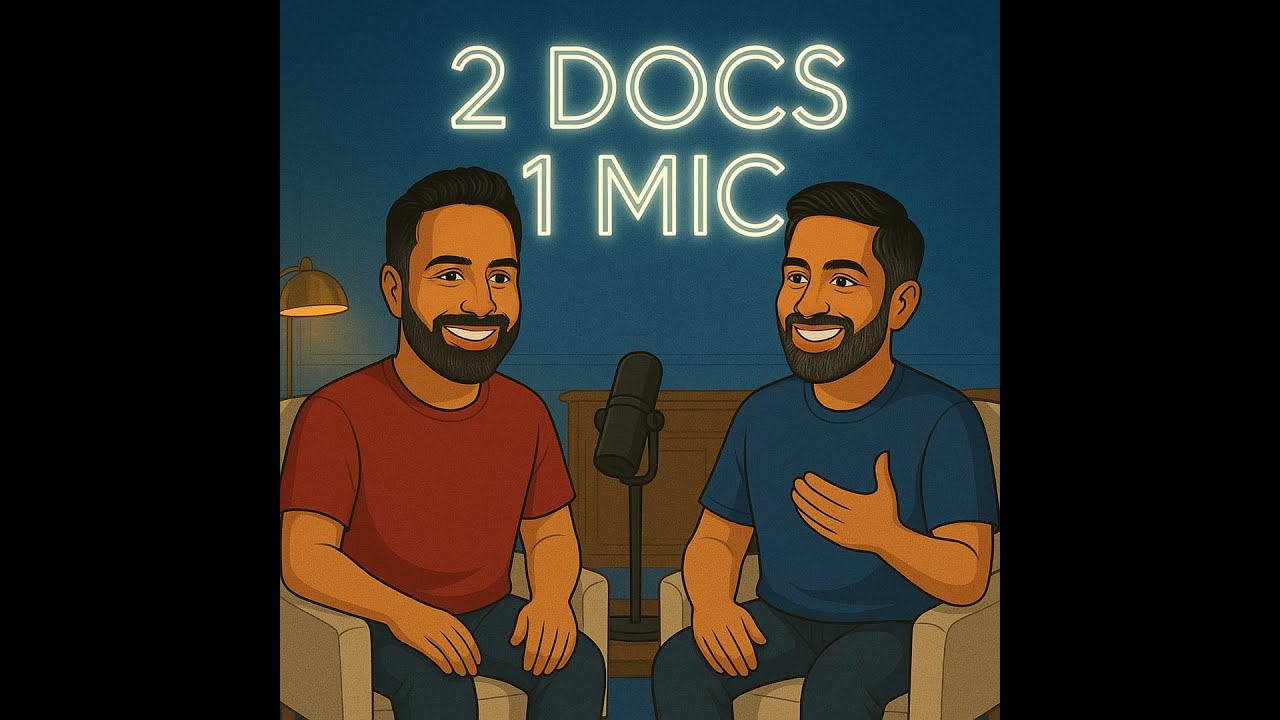
Your hosts