BPC-157 and Other Peptides: Miracle Molecules or Hype?
About this episode
Dr. Adil Ahmed and Dr. Humayun Naqvi break down the peptide craze, starting with what a peptide actually is, then weighing the hype against the evidence for BPC-157 (the 'Wolverine shot'), the angiogenesis-driven healing seen in rat studies, and its theoretical tumor-growth risk. They cover GLP-1s and insulin as proven peptides, sermorelin, epitalon and telomerase, melanotan, and thymosin alpha-1's real clinical-trial data in hepatitis, HIV and sepsis, while warning about unregulated gray-market injections and the financial conflicts of cash-pay peptide clinics.
What we cover in this episode
- What is a peptide and how do peptides signal in the body
- BPC-157 safety, benefits and tumor growth risk
- Does BPC-157 actually heal tendons and injuries
- GLP-1s and insulin as proven peptide therapies
- Sermorelin for muscle growth and its melanoma risk
- Epitalon, telomerase and the longevity vs cancer tradeoff
- Thymosin alpha-1 clinical evidence in HIV, hepatitis and sepsis
- Why peptides like BPC-157 lack human studies and FDA approval
- Conflicts of interest at cash-pay peptide and wellness clinics
Full transcript
You know, anytime we have a themed party, you know, Samia, my wife, will have all these ideas and she has awesome ideas, but then all the decor, I'm the one pinning it up, putting it on the walls. I'm the one standing on the ladder. Just >> have less ideas, please. Let's talk Let's keep it simple today. >> It came together really nice.
It was actually really cool the the party cuz it was right in time with Stranger Things coming out and the new episodes being released and so um it was pretty fun. We had like a big demogorgan statue, a piñata for the kids. That was another demogorgan. All the lights with the happy new year sign just like when VCNet comes, you know, all the lights change and stuff. Uh we made clouds with little uh lights hidden in them. So, it was it was a fun time. The kids had a blast, too.
They didn't they had no clue. It was Stranger Things, but >> they had no idea what it was. They just saw lights and uh >> Correct. >> no demo gorgans, hopefully. >> And it's always fun to hit a piñata. So, >> I mean, we spent our New Year's Eve uh in nature, man. Just outdoors, hiking, hanging out, and then I think we got so tired that I fell asleep at 10:30. >> It's a good bedtime. >> Yeah.
We celebrated New Year's uh you know turning at nine with some s'mores and campfire and then uh the kids fell asleep and while putting kids to sleep we both fell asleep. >> The day was fun because we we were hika and we we did a bunch of hiking and spend you know it's after it's really nice to spend just some time outdoors.
I think uh you know after you when you live in a big city and you're constantly just working and uh you know overwhelmed by work and uh you know I think spending time in nature somewhere quiet peaceful it's very nice it's nice for wellness right >> dude it's good to disengage yeah absolutely and well wellness is the theme for the new year right >> wellness it is wellness it is today is an interesting topic a lot to yeah >> uh I think it's it's a controversial topic I think it's a a topic that there's going to be a lot of opinions about from many different ends.
A lot of different have strong opinions about this, right? So, I think this is why we chose this as our first uh topic of the year. >> Yeah. You know, I think this whole like peptides craze, you know, I mean, the whole wellness craze, taking your health into your own hands, anti-aging, the longevity stuff, recovery, all this stuff, it's very popular right now. I mean, you go on social media, you talk to people, everyone is talking about this. My patients are so curious about it.
They ask me about peptides all the time. Um, and so, you know, one thing, homoay, that I think would be a good launching point for this episode talking about, you know, peptides is really what is a peptide? You know, is a peptide just some thing you inject that you heard about on social media and it'll help you speed up a recovery after an injury? Like, what what is a peptide really? And that's like, >> you know, our whole body is made of made of peptides, made of proteins.
is one of the most common things the whole building block of our body like collagen all these proteins pro all a peptide is a peptide is just a string of amino acids that eventually become a protein peptides are the building blocks of proteins and proteins there's so many different kinds of proteins and so when people think peptide I just don't want people's knee-jerk reaction to be oh this is some molecule or some agent or some drug that can make me heal faster or make me sleep better or make me live longer or fight make my immune response stronger.
Those are all potential touted effects of certain different peptides. But a peptide can even be something that's very common and everyone's heard about like insulin, which is a medicine that's been around forever. Yeah, insulin is a peptide. Same thing with like random stuff that's non-medication, you know, like snake venom. When you get bit by a snake or bit by a spider, those are peptides. Those are proteins in the venom that exert negative effects.
So th this whole class of molecule of drug potentially peptides and proteins is very broad and it's not just something you hear about for faster recovery longevity and stuff like that. >> I mean I don't know if you remember in college in medical school through biochemistry how many amino acids did we have to memorize right?
Yeah, >> like there there was a whole list of different amino acids uh that we had to memorize, go through them and then those amino acids different molecular structures formed of different elements, right? Bonded by certain type of bonds form amino acids which then are combined together to form peptides. And those peptides further linked together to form proteins. And everyone knows what proteins are, but you know peptides is this word that kind of grew.
And you know, some people don't truly know what peptides are, but we've learned about peptides all our lives. I mean, through medical school, through college, peptides were little signaling molecules in the body that send signal from one part of the body to another and they tell a cell what to do a lot of times, right? Um, >> totally. Yeah. I mean, it it it gives direct signaling to the cell.
Usually, you have a receptor on the surface of the cell and a peptide molecule comes in and it interacts with that receptor. Something occurs. Usually, the receptor changes shape. It sends another molecule. Now within the cell that goes to the nucleus, that headquarters of the cell and it does something. The cell changes, the cell secretes something, the cell interacts with another cell. Whatever happens, that downstream cascade, that's really what these molecules do.
That's what these peptides and protein signaling molecules do is it's intracellular and intercellular communication to do something. And that's something could be a huge variety of things. It's not just one type of action. >> Yeah. So, I I don't want people to, you know, um there there's two camps in this, right? There's there's people that are in the wellness industry. They're online influencers.
Uh some very learned people, some some not so learned people, some true scientists that are doing research and um truly understand biochemistry, organic chemistry, science, and know what peptides are. And then there's a lot of people out there that that have heard and they're really into working out and really into uh focusing on their health and building their bodies into uh you know um these uh temples of strength. Uh >> well said well said jacked dudes online basically. >> Yeah.
And and that's where the the whole industry kind of blew up, right? I mean, I think for me, um, so what what I was saying is there's two camps, right? There's people that are skeptics or deniers. There's people that are embracing it fully, right?
I feel like I'm somewhere in the middle where I have some skepticism, but there's also some excitement, right, about the these peptides because we do know peptides are a real thing in our body and there's a potential benefit of this is an area that needs a lot of exploring, but I know the reality. There's a lot we don't know, right? There's a lot we don't know. >> Yeah, there's a ton. I mean, you know, like it's patients ask me all the time and they probably come to your clinic and ask you, too.
But, you know, being an orthopedic surgeon, I deal with muscular skeleal injuries all the time. And patients are asking constantly because they see it online. I mean, it's in the news, it's in magazines, it's in periodicals, it's on your reels on Instagram all the time that I use this peptide or this peptide like BPC 157. I mean, there's so many of them, but that's a common one. Oh, you inject this, it'll heal your ankle fracture. You inject this, it'll treat your rotator cuff tear.
And they ask me, I mean, people are very genuinely curious. Um, and they want to know, is this something real? Is this something safe? Can I get it? Do you give this to me? And me personally, I don't offer it to any patient. I don't recommend it to any patient. Um, there's a lot of doctors in Houston here where we practice that do. I know a lot of them personally. And so me as an individual, as a physician, I can't come out and recommend something that doesn't have evidence.
But that being said, it doesn't mean I'm against it, right? Like I I personally, this is my personal belief. This is not a medical recommendation, but my personal belief is I think we've just scratched the surface of peptides.
And there is a whole iceberg under there cuz I I think this is like a type of class of medications or I guess I should say potential medications that hasn't really existed before because the vast majority of them if you look at at least whatever evidence exists in cellular level studies in culture assays and in small animal models not a lot of human data for most of them but if you look at those studies most of these are modulating effects on your body.
They're not like here's a medicine for this disease, okay, let's go decrease blood sugar. Here's a medicine for this disease, let's decrease blood pressure. They they don't work like that. They basically modulate up and downregulate. And some medicines do both depending on the need of the body, up and down regulate your immune response, your healing response, what type of inflammatory cell comes in and what doesn't.
A lot of these things we don't know for sure what the downstream effects are going to be, what the human effects are going to be, but I just think that its ability to be more of a modulator of our body rather than just a direct this is a disease or an ailment that's afflicting you. Let's attack that specifically. They I it's very different than medicines that have existed before. That that's how I in my reading about it, that's how I've looked at it, >> you know. Yeah.
I know you're you're absolutely right. So, as a as a cardiologist and someone who focuses on prevention, you know, preventative cardiology, I get tons of questions about this. This is uh and every day I I can't tell you how many people show up with uh printed out copies of Chad GBT chats about, you know, different medications and and peptides and, you know, uh enhancing agents and vitamins and supplements.
Uh we've done a whole episode on supplements uh you know um and every time you know anytime I'm about to prescribe a medication the most common question is can we do something natural right can we do something that's not a medication right why can't we do can why can't we just do diet and exercise why do we have to do a medication you know a lot of times my my respon my response varies but a lot of times I like to give an analogy hey you know you you you have a brand new car you drive the car for many the brake pads start breaking down now.
You need repair, you need you need some uh oil change. You need uh brake fluids, right? Do you just let it go and try to just let uh the car run on its own and run its course uh or you put in medic you put in oil or fluid or break fluid or change the oil or do servicing to, you know, u prolong the the life of the of the car. That's kind of how our body works, right?
bodies need modulation and that's kind of sometimes my philosophy on drugs are as well but we need to have clear indications of what we're treating a lot of times because as physicians we have skin in the game right we're using our license to treat patients who are depending on us for our knowledge and our expertise right they're coming to us they're depending on us to prescribe these medications and guiding them on what will work and what will not work what are the benefits and what are the harms with a lot of medications, you know, I can tell them, hey, there's this is why I'm doing this.
This is what I'm treating and these are the side effects and these are the potential harms of these medications. Right now, I >> Yeah, I mean, you know, the lack of evidence, right?
and and the fact that I mean a lot of these peptides that are touted for use by a lot again a lot of influencers wellness proponents and stuff a lot of them are not FDA approved they're clearly not FDA approved and you can only get them from you know the so-called gray market black market as a research chemical and now it's being used off label after you acquire it as an injection most of them are injections an injection of some kind that's a red flag Yeah.
But one thing I want to kind of comment on that is when when these influencers and these these wellness industry people tout these molecules, right? They always add in discuss with your physician or your uh your provider or your doctor about these before start taking them because they don't have skin in the game. They don't have anything to lose. All they have is gain from the the the knowledge that they're spreading about these.
And a lot of these people are very knowledgeable about these these peptides. sometimes even more than us, right? Uh they >> for sure I mean I I'm not saying I'm not saying that you know whoever is a proponent of peptides as a therapeutic agent. You know you go to some clinic um and they do a lot of peptide treatment. I mean there's a bunch of them out there. I'm I don't I this is my opinion. I don't think they're all doing something wrong.
I just think we don't this is something that we don't know enough about for me individually to prescribe it. But there's financial incentives obviously, right? All this stuff is cash pay. It's not through insurance. So if you're a physician that is ordering and discussing and then injecting peptides and doing your whatever treatment protocols with your patients, I for sure think there's some people that believe they're doing the right thing and I I think they're helping their patients.
Anecdotally, there's a lot of evidence, right? But anecdote is not real science. There's a lot of anecdote and a lot of, "Oh, I did this to this patient. they got better. There's a lot of people, you know, hear a lot of podcasts that are longevity wellness anti-aging podcast and you'll hear people discuss that that, oh, I have so many patients that have injected this peptide or this lady, she had a real bad meniscus tear. She was told she needed surgery.
I gave her three rounds of peptide injections and she got better. Her meniscus is healed now. I mean, that's a huge claim to make, you know, but people are going left and right making these claims. I mean, it's just to me, I just so strongly try to practice with real evidence because I think that's the only way we know we're doing in our minds the right thing. When I hear people make claims that strongly, it just gives me pause.
But I but I disagree with you on that because when there is a physician physician, a provider, a nurse practitioner, a PA that's using their medical license running a clinic where patients that are trusting their knowledge and their their uh expertise, they're coming in, these people are directly selling these peptides to them and there's already a financial incentive there, right?
There's already an issue in the first place where if you know, if I was if I was uh prescribing statins and for every statin I prescribed, I was getting uh $300, $200, $100, that would be a conflict of interest for the first place. Am I in the right mind uh right phase of mind to kind of guide them and educate them when I see that if I maybe leave out a little bit of information? Maybe I tell don't tell the complete information to them, I will have that $300 extra per this molecule. Right?
There's already starting off there is a conflict of interest. Now, on top of that, as a physician, you're now touting these peptides knowing that there's no real evidence and truly don't have any uh real evidence of benefit. Yeah, there's theoretical benefit. There's small animal studies showing benefits, but there's no true large studies uh showing benefit. And also, we don't know much about the harm. And that's >> I guess we should we should clarify that it depends on the peptide, right?
I mean, there's thousands and thousands of peptides. Some have real randomized placeboc controlled clinical trials and are used in cancer treatments in v in viral treatments, sepsis treatments, right? But the ones that I think you're probably alluding to are like, you know, these ones for so-called rapid healing after an injury or accelerate surgical recovery, right? Those ones like the BPC 157s and stuff, they don't have real human data. You're correct. >> No. Well, don't get me wrong.
I I'm a very common prescriber of peptides. The peptide that I prescribe most commonly are GLP-1s, right? GLP1s and GLPGIP uh agonist uh medications like Ompic, Monaro, Zebound, uh Wiggoi, you know, >> they're super common. >> These medications are very common, a big part of a cardiology practice, but we have long-term data. We have 10 years of evidence on these medications. We've done trials regarding heart failure. We've done trials regarding cardiovascular outcomes.
We've done trials about um sleep apnea, diabetes. But in these trials, we also found out that these medications can cause harm, right? These medications potentially can exacerbate uh you know some types of cancers like meary thyroid cancer. These medications can cause pancreatitis. These medications can cause permanent blindness sometimes, very rare, but they can. And these medications can cause u gallbladder disease. But that was found out through long-term studies in large populations.
when we started realizing these things, a lot of these gray market compounds that we're discussing, a lot of physicians are prescribing and selling them, but we don't know. I'm very excited about them. I mean, I'm excited for the possibility of these medications allowing me to heal patients in a sense that they don't need some of the medications I prescribe them already, right? Uh but I need to see that data and that's where I'm skeptical. I'm maybe you're more optimistic about these.
I'm more of a skeptical person right now where I haven't seen the data. So I cannot tout them yet and I I don't think it's right to uh um completely without uh the clear uh discussion of the harms of it, it's right to prescribe these medications. Now if you're having the discussion, if if there's a physician that's out there that's telling them, hey, this is what we know, this is what we don't know, take it.
And now this is what I think personally and I've used these medication and this is why I think it's good. If they're if they're educating patients on that and then giving these medications, that's completely okay and that's ethical because they're telling them the whole story. >> But is it completely okay? Cuz like I mean think about it like you said earlier, if there is a financial incentive, right, that the physician will order it, they have it and now they're going to upcharge it.
You know, there there's always some bias, right? You have some incentive underlying it. Like I think you know it's kind of that whole idea that we're taught in medical school and training of shared decisionm that you know the patient comes to you with a problem. You go through a bunch of options with them and now it's kind of on the patient to decide. You don't really like force them or box them out or make them make a decision that you want.
But I I genuinely take issue in some sense from Maya with the whole idea of shared decision-m because we as a doctor and the patient sitting in front of me in a 10-minute 15-minute visit do not have a context where we can have shared decision-m the knowledge I have and the background I have and experience I have about that condition and numerous patients is far different than that patient can have.
So I think what a lot of this is is again my take on it is when a lot of these clinics or providers are painting the conversation in that way that okay well here's a peptide we don't really know much about it but it could have all these benefits. It's already a type of patient that is seeking an alternative type of treatment. You know you've already got a captured audience. I think it's a very easy sell to sway that patient to fork out a bunch of cash for this treatment.
And I that sounds like a negative uh vibe that I'm painting on this thing. I personally, like I said at the start, am positive that peptides do have a lot of potential, but I think the way that you go about doing it, administering it to patients, I think that's really really where the danger zone is. Not just, you know, liabilitywise for yourself, I it's in terms of ethics, you genuinely don't know what the treatments are. Like you don't know what the effect is going to be other than anecdote.
>> Yeah. And you know there are a lot of my friends you know I I know personally people that sell some of these these these compounds that they truly believe in them and they truly believe in the benefits of them. And the discussion that we have is yeah there there is uh there's a greed on the other side as well. There's a whole pharmaceutical industry that only picks and choose certain molecules and and and compounds that they know they can sell and make money off, right?
uh something that does not have much viability in terms of future production uh establishing a a brand and being able to sell it does not have much viability in in the pharmaceuticals eyes and they're not going to work on that molecule to make it better uh and be able to have it accessible to masses get it FDA approved because FDA approval like we've talked about in that clinical trial episode FDA approval is a long process it takes a lot of investment a lot of money and a lot of pharmaceutical companies are not willing to make that investment initi uh to get these molecules improved.
They're not, you know, they got lucky with GLP-1s. GLP1s were they were analoges. They were stable compounds that also were improving people's diabetes, right? It was improving blood glucose sugar. So, they had exact they had a way to kind of get this get the studies done and get FDA approval. And then eventually the other studies came on later. The weight loss trials and the the cardiovascular outcomes trials came on later.
Initially the diabetes was the easy lowhanging fruit that they were able to capture. Right. >> Yeah. And you know one one thing you mentioned that that's very um specific and important is that the GLP1s are analoges right? They're not the exact natural compound found in that Hila monster venom and all that. The these peptides like BPC 157 I think that it's only like 15 amino acids. A lot of these are really short chain. They're not synthetic molecules. They are real things in our body today.
like BPC 157 is made in the stomach. It's part of gastric secretions that we all have. And so you can't patent that because that exists in every human's body. So the fact that you can't patent it, it really makes it difficult to monetize. And the fact that it's such short chain, tiny tiny tiny little fragments of amino acids, only 15 amino acids, 20 amino acids, 30 amino acids, they're not, like you said, they're not stable.
It's very difficult to keep them stable in a fridge, on a shelf or anything like that. And then how do you administer them? A lot of them, these small tiny little peptides are not going to be stable when they pass through your digestive systems. You can't take them orally. You got to inject them, which is again a lot different than a the other drugs like you were mentioning. A lot of those GLP1s initially injections there's oral compounds now too, right? Yeah.
>> So I mean there's a lot of incentive behind certain peptides versus others just depending on the molecule itself. >> Yeah. So some of these potentially really beneficial peptides like BP7157, BPC157 or TB500 or whatever, they may never see FDA approval or may never see those largecale trials because pharmaceutical companies do not have that incentive to monetize them, right? Because they cannot monetize them. And that's kind of where that dilemma is, right?
Hey, you know, as a physician, I want every single compound out there that can help my patients and uh help with them with their healings, joint healing, wellness, longevity. But uh how will we get that evidence to really know if that molecule causes benefit or harm? >> That dilemma is on the patient side too, right?
Because I mean people in general I think in the last decade decade plus you know the whole like aura around anti-aging and longevity and lifespan health span has been around for a long time but especially in the last 10 years with the advent of social media everyone's listening to podcasts everyone's reading about this stuff how can I help my life how can I improve the length of time I live but also the quality of life decrease the medications I take that's a real thing and patients want to know that and I think you know this whole like all we've just been talking about the phacele ical industry and how a lot of it is very much financially driven.
It has to be. These companies are not, you know, charities, right? These giant companies like Amgen and stuff, they want to make money. They're a business and if they don't have an ability to make money from a product, they probably will not go after it. Whereas a lot of these compounds, since they can't be patented, they can't be monetized, they could be left by the wayside.
And I think the average person has a distrust right now of some level in medicine in general, in healthcare in general, in the pharmaceutical and insurance industries in general. And in some way, maybe rightly so. You know, like we were talking about this a little off air. And I think it's very relevant like COVID and the time around CO really sparked a lot of distrust because people were skeptical. Is CO real or not? Is the vaccine needed or not? Do we need another booster or not?
First the CDC saying this, then Dr. thought she's saying this but this country is doing this. Do we need lockdown? Do we need masks? How much 6 feet distance? What you know like every little thing was questioned, changed, altered, added, subtracted it constantly, right? That was a huge I think real hit in a negative way on the whole business industry science of medicine.
People have this distrust and these peptides since they're not often coming directly from a medical establishment or a big pharmaceutical company. I think a lot of people like that. I think they like the fact that they're getting them secondhand or that they're seeking them out themselves rather than being prescribed them for some chronic disease. >> Yeah, there's been a whole man there's been such a big mindset change. You know, there's >> the mindset of people over the past 10 years.
We've seen that change has come through our medical training where the doctor's word was considered unchangeable. Right? I mean 15 years ago, 20 years ago, what your doctor said, you just followed, right? Followed blindly.
Uh many times uh and then as as information became available, you know, internet just was available in the palms, social media became such a big deal, you know, podcasters and influencers, anyone able to come on air, talk about their areas of interest and uh educate patients, patients and people about that, right? And then COVID happened, right? COVID was handled poorly, right? I mean, and what was the option, right?
That the when I when people talk about COVID was handled poorly, this was a once in a generation pandemic that came all of a sudden where people did not see it coming. Some people saw it coming, some people did not see it coming. Um, we were just trying to figure it out at the at the time and you know there was this perception that our establishment, our institutions know exactly what to do.
But in those in that situation when COVID came people just did not know what to do and we were trying different things out right there was ideas oh does hydroxychloricquin work does um does uh you know monoconal antibodies work does >> some some people were even touting Lysol >> yes Lysol ingesting Lysol works you know the vaccine came in and the vaccine was uh the operation warp speed right the vaccine was created very fast and then there was this whole skepticism about vaccines and should we >> and it was you remember it was a new class of vaccine right mRNA vaccines which was never a thing really before it was it was a whole new thing so there was there was that distrust too which I find kind of funny to be honest with you that it really it's like the same the same people the same talking heads that were so skeptical of the COVID vaccine because this is new we don't know anything about it there's no evidence behind it a lot of them are the same people touting peptides right now >> and they're injecting them and they're injecting them without knowing what could happen, right?
Without any large scale studies. They don't need studies for this, right? They don't need studies for these potentially beneficial but potentially very harmful molecules, but they do need strong studies for the vaccines which has a lot more data than these. Right? So that's kind of where the skepticism came in. And then I think the other skepticism came in when the mandates happened, right? Where people were getting fired, losing their jobs because they wouldn't get the vaccine.
and and then we started telling people that hey even though you've already had CO twice you still need to get the vaccine or you lose your job and that pissed a lot of people off because that was not right right I mean I think most most most people can now look back and say that hey you know a lot of times we were just making journal blanket statements and policies that were not very uh applicable to every person and some people probably did not need those mandates right because if they've already had co they had certain type of immunity that maybe a vaccine was not really helping them as much and forcing them to get the vaccine at that time was maybe not a good idea.
But on the hindsight, I mean, you know, looking back again at that time, what choice do we have? What choice do we have besides to make public health policy? Public health policy when it's made, it's made for everyone. You don't >> Yeah, it's a utilitarian approach. It may suck for the individual, but the hope is it's best for society at large. But I mean I just you know to circle back I think it just it did sew a lot of distrust and skepticism in medicine and healthcare in general.
And I think that combined with just how much everyone's on social media and has access to information that you know is spoken very articulately by a lot of people who are touting things like these peptides. Um I think that's a big combination that's led to a huge hype and interest in them. I mean, I've just seen in the last couple years, there's so many more patients that have been asking me about peptides um than I ever thought.
I mean, like when I was in, dude, when I was in residency and fellowship, I've never even heard about this stuff. No patient talked about it. But in the last couple years, I mean, it's exploded. I have not had a clinic in the last year for sure that a patient hasn't asked me about peptides. >> Wow. Yeah. I mean, let's let's let's kind of get into that, right? So, we know the the more common ones, right? We know we've talked about GLP1s being peptides and we know about uh insulin being a peptide.
These are very commonly used, but what are some of the let's talk a little bit about the the gray market ones, the ones that are being >> used um as research uh chemicals and they're not really FDA approved and uh you know, they're still being widely used by a lot of these wellness clinics. Um, the most common one that shows up is BPC57, the body protection compound 157. >> Yeah. I mean, I think this is probably the most common one, the most popular one.
Um, because mainly it's, you know, the people that are interested in this, I think, are the ones that are, you know, very into fitness and health and these people that get injuries, they want to recover faster and stuff like that. And, uh, sometimes the option is take time off, have surgery, or they found now this third leg of the stool. Uh but basically to break down BPC 157 a little bit, we mentioned earlier it's naturally occurring.
It's in everyone's stomach secretions, meaning it's stable in the stomach. Um it was actually like found by a bunch of Croatian scientists. And if you look up the data, if you actually look up the real studies that have been done on BPC 157, the vast majority of them are actually out of Croatia. Um, and so a lot of these studies that were done on this compound that give us the initial information that we have are cellular level studies and a lot of rat studies.
And so in those let's talking about the rats, right? Because they're a mammal. So you can what people have really done is they've extrapolated the rat data and said okay it will do this right which is a huge leap to take but that's what it's been.
several interesting rat studies that highlight the repair capabilities, the immune modulation capabilities, inflammation modulation capabilities is so one study that was done, they took a bunch of rats, they took two groups and they just cut the rat Achilles tendon and the Achilles tendon I mean you can't if you have a transsection of the Achilles tendon especially a quadriped like a like a rat you can't walk and so they had one group that they injected uh in their stomach not even at the site in their stomach just BP PPC 157 and the other group they didn't do anything and at the end of the study when you know they sacrificed these animals obviously so they can examine under the microscope the repair and all this stuff at the time when they sacrificed the rats they injected them serially with BBC 157 in the stomach the group that had the injections it was remarkable they had essentially complete healing and even when you look at the micro architecture under the microscope I mean they were fibroblast bridging all the signs you see in a healthy tendon that had healed and the group that did not get any injection nothing.
They didn't heal cuz that tendon transsection when you transsect the Achilles, it doesn't just cut and stay there. It's not like a piece of cloth. It retracts every time. It's like an accordion. >> It's under a lot of tension. That's how it exerts force. You can't exert force unless there's tension in the body, right?
So that's a that's a very commonly cited study and it's a very common thing that pay I've had patients actually ask me in clinics specifically who have like a rotator cuff tear in the shoulder which is another tendon injury. Hey can I just inject BPC 157 instead of you fixing my rotator cuff? And it's like you look in the MRI their rotator cuff is ripped off their humorous and retracted. I mean it's like it's not going to just find its way there cuz you shot up a bunch of goo in your shoulder.
But like >> you know who knows, right? >> We don't know, right? I mean, I'm making that claim. I'm making that claim very confidently, but I guess the right answer is I don't know because that study just hasn't been done. And that's the real reason science is needed. Human data is needed because we don't know because we're not rats. >> But so that that's something that's extrapolated a lot. >> I mean, that's why, you know, there's, you know, the the the nickname for BPC57, right?
It's called the Wolverine shot. >> Wolverine shot. Yeah, that's right. >> Like, you know, Wolverine shot because it it it it Wolverine heals himself. uh and C157 through the RAT studies have shown properties of healing very rapidly. tons man.
I mean there was a similar almost identical study they did with the quad tendon the quad muscle which is your you know your thigh muscle um which again you cannot walk you can't move around especially a rat if you transsect the quad and same thing happened it and in that it was through the muscle level not the tendon and they had real myasytes muscle cells growing they had real all the markers of muscle cell proliferation like desine and all that stuff when they looked at it under the microscope I mean it was there which in the other group it was not Um th those are real real things.
You know, in terms of regulation, we talked, we mentioned it's not FDA approved. Um so you can only get it on the gray or black market, whatever color market you will, you you can't get it. It's not legit in that sense. It comes as a research chemical and then you use it off label. It's also banned by like the World Anti-Doping Agency. So for athletes competing, professional athletes, if it's found that you're taking it, I mean it is a band molecule just like anabolic steroids.
Even though it is not a steroid, it's a peptide. It is a band molecule. >> There there are some studies there are some studies that have also shown some benefit in gastrointestinal disorders, right?
for sure >> in people with pepic ulcer disease or inflammatory bowel syndrome >> uh IBS I mean there there is uh gut healing properties of this compound >> for sure and that that's like what the postulate is is that it's a natural gut secretion because it has some gut protective properties it even improves sphincter tone which helps decrease acid coming into the esophagus decreases ulcers in rats it's been shown to do that it it very strongly modulates blood vessel growth, which I think is one of the main proposed reasons why it has such a beneficial effect to healing because you can't heal anything if you don't get nutrition and your immune cells to the site.
The immune system is not just to fight bacteria. It it heals stuff, but you can't get that stuff there if you don't have the route. And the route is the blood vessels and it really stimulates angioenesis. >> Yeah. So with that angioenesis, I mean the promotion of angioenesis is is interesting because that's how it's the benefit is provided, right? by creating blood vessels to a certain part of the body. But you know what else needs blood vessels to grow? Tumors. >> Yeah.
It can promote tumor growth. >> So the fact that it can possibly build uh blood vessels and feed tumors and have help them grow much faster is a potentially very dangerous uh part of this compound, right? That uh a lot of the the wellness influencers do not talk about sometimes.
Some some do like yeah I listened to Hubberman's podcast >> about this and Huberman did mention that as well uh on on the podcast >> uh but tumor growth acceleration is a big concern with this and until like we talked about it with GLP1s I mean we saw some some some certain type of cancers being promoted or exacerbated by usage of GLP1s I mean we don't know if unregulated consumption of BPC57 can lead to accelerated tumor growth and even create new tumors in the body because of the angogenesis aspect >> for sure and you know that that's a huge point too the unregulated consumption what you just mentioned because one of the biggest facets of clinical trials is to figure out really like what the right dosing is not just in terms of concentration per dose what route of dosage do you use that's safe and effective how much to give per dose how often to give it how do you need to cycle it on and off I mean is it just a thing you take every week every day you don't understand that stuff and know that stuff till you do real trials and find out.
And that stuff just hasn't been done. There's been one only one human study to my knowledge and it was done last year in 2025 on BPC 157A BPC 157 and it only had two patients. >> And that entire study was it was one male and one female. And on day one of the study, they injected him with 10 milligs. On day two, they gave him 20 milligrams and they found no negative effects. That was the whole study. This is like not really much to it. That's it.
there's been no other human data >> when when we do phase two clinical trials you know in phase two clinical trials we have like six different arms and each different arm has different dose and different length of the the type the way the medication is going to be given right uh we don't know how much how many milliliters how what's the frequency of does do we inject it every day do we inject it once a week do we injected once a month yeah we we have the halflife of the molecule which is very short right so that means do we inject it every day uh and >> yeah you just don't know until Do you study this?
>> Does injecting every day for a month cause you to develop a tumor within a month? Does it or does not? I don't know. That's why we do studies. But like we talked about, the frustrating part is the studies may never get done. >> Right. >> Right. Right. >> You know, one one like really random effect of BPC 157 that I was reading about which like >> it just shows that these molecules just like the GLP1s have so many disparate effects in our body, right? They're signaling molecules. Yeah.
Yeah, BBC 157, again, this is in rats. It shows that if you expose a rat that is on BBC 157 to acute alcohol intoxication, like a load of alcohol to the rat, that would make them like beyond drunk. I mean, massive acute alcohol intoxication. The BBC 157 exposed rats compared to non-exposed rats had a much lower effect of getting intoxicated.
All of the signs in rats, like you know the human coralate in a rat of being dizzy, slurring your speech, acting goofy, inhibition of stuff, all of those were diminished. And the BBC 157 seemed to mitigate the effects of acute alcohol intoxication. And similarly in rats that were now chronic alcoholics because sessation of alcohol, just like in humans, creates withdrawal, which can kill you. Alcohol withdrawal can be lethal.
BBC 157 in the alcohol withdrawal rats once the alcohol was withheld did not pass away did not uh experience mortality like the other rats did. So like and I bring this up just because it's so different than the other touted effects of BPC 157 means there are some real central nervous system acting effects of this peptide at least in the rat population. There's no other way it can modulate acute alcohol intoxication and withdrawal because those act on the receptors in your brain.
I mean, so it just goes to show we're just scratching the surface. We have no idea what the potential good or bad effects could be of these medic of these. >> That's how peptide signaling works, right? That's how peptides because you know a peptide can go in and bind to one receptor and have a completely different effect and go and bind to a different receptor have a completely different effect, right?
It can have activating effects on some receptors and antagonizing or um inhibiting effects on some receptors. So uh and and that peptide can be slightly changed in their structure and that effect can be completely different, >> right? Uh a lot of times so it's very interesting and and just like GLP1s, a lot of these peptides do tend to work on many different body parts and and have many different benefits. >> Uh and I'm excited about finding more about it over over the years.
I think this is like you said, it's a horizon uh that, you know, still needs to be conquered, you know. >> Yeah. I mean it's just it is exciting though. I you know despite like me very openly saying I don't prescribe it to my patients just because I I don't have the data. I I am very excited about it because I think once the real science comes in just the fact that it is something new and different and has this modulation ability that it doesn't just do one thing.
I I think we have the potential for something that could be a gamecher but I don't know. >> Yeah for sure. No.
So another interesting one um you know that I kind of came across was uh serorellin and I think we can kind of hit some of these some of these uh compounds a little bit and kind of talk about their benefits but there there is a lot of uh use of surreal or similar compound tesmoral uh you know and some some of these actually have human studies uh you know and some of they are there is FD approval for certain compounds sorelin was approved for a long time and then FDA took its approval back and uh it was used in a lot of like musculardrophe or you know HIV related uh muscle loss as well in the past.
Uh but then they started seeing issues like exacerbation of melanoma um you know or darkening of existing moles that that worsened over time. So they took the FDA approval back because they they started seeing certain harms but these these molecules are still being used quite often.
Some of the times people who take seren they get that rush that flushing high all of a sudden when they take it and they feel very uh good with that but it's also shown to have you know effects on increased blood pressures but people tout about the the muscle recovery and the muscle muscle growth uh from Surlin as well uh and you know and there was at some point evidence and FDA approval in the past as well. >> Yeah.
I mean, you know, let's let's like there's so many things that are touted for muscle growth. Um, and I think, you know, in in that sense, you know, looking at that muscle growth, hypertrophy, all that stuff, a lot of people can get confused, you know, who are who are not well versed in this stuff when they just hear it from someone who's like this jacked dude on a podcast or a social media person that, oh, I take this, this is like the secret to how I got so muscular and fit, right?
Because they think, oh, it's a peptide. It's a protein. Muscles need protein. They they it must make sense, right? And I don't like knock on the the average person for thinking that way. It's not a flawed thought process, but it just shows that like just because it's a peptide, just because it's a protein doesn't mean it's going to contribute in a positive way to muscle. It can have all these other effects.
And the that smearin like you mentioned was touted as that, but it has a lot of those other negative effects. I mean, if something is is shown to be directly related to causing tumors, melanomas, and things like that, it's clearly got other downstream signaling problems. >> Yeah.
And that's kind of comes back to the unregulated administration of these drugs where someone who is administering these drugs is not as wellversed in some of the side effects and maybe doesn't even know the dosing that is safe to do for that patient. Right. >> Yeah. You know, here's one thing that's interesting there. There's one other and like people that are listening, there's like thousands of peptides. We're not going to talk about nearly even all of them, but just a few interesting ones.
One that kind of goes along the same vein, who mayo, of possible tumor related um related stuff is epithelen. Epithelen is one that is um like a a molecule that comes from a protein complex made in the pineal gland, which is a gland in your brain. Everyone has one. Um and the most common thing that people know about from the pineal gland is that it makes melatonin which helps regulate our circadian rhythm and helps us sleep.
So this peptide in particular epithelin um has two main effects that are really really uh really touted. Now number one is it stimulates endogenous melatonin production. So instead of just taking melatonin pills or whatever to go to sleep, which actually decreases your body's own melatonin production over time and in the long term can be damaging and you need higher and higher doses of melatonin. Epiallen, again, this is animal studies.
This is not like human trials, but epien has been shown to increase the pineal gland's own endogenous melatonin production, which again that's a different thing than has existed before. It's again has potential but we don't know if it's going to do that in humans and safely and what other effects it has.
>> So then the other thing not just circadian rhythm regulation but the other thing that epithelen is touted to do is anti-aging and longevity and the way that it does that in cellular studies in rat studies is it increases talomeorase. Talomeorase is an enzyme in your body that extends the length of an area on a chromosome called the telomeir. Basically, if you think the chromosome is just like it's like almost like an X-type shape. So, it has these arms.
At the end of those little chromosome arms are these like caps like protective caps that protect the chromosome DNA. And so, over time, the telomeir shorten because the chromosomes divide again and again and again to keep us alive. That's cell division. That's how all of us stay alive.
And over time as the telomeir shorten with each division each division that's almost like a builtin checkin a built-in biologic clock that you ain't dividing anymore and now that cell dies that happens across our body that cell senence basically that cell it was its time.
It's a built-in clock because if you keep dividing again and again and again, just the probability of millions of cell divisions, having to do every cell division perfectly and not have an error in the DNA code to become a tumor, to become unregulated growth. That's why this checkpoint of the telomeres exists. And so this this peptide epithelen it increases to activity which actually preserves and increases the length of the telomeir.
Meaning this cell that was designed by our body, biology, whatever you believe to only divide so many times, now it checkpoint is extended. It doesn't have that same limit anymore. It can continue dividing, continue dividing. And at what point does that continue division over time, a long enough time scale, the probability that you're going to get unchecked, unregulated growth becoming a tumor, it's almost a certainty with a long enough time scale.
So that is just like you were saying with smearellin a lot of these effects that are so-called anti-aging because it extends telomeir length it keeps the chromosomes replicating or cells replicating longer I mean they were designed not to do that for a specific reason so it's it's very much balancing okay do you want to keep long telmir length keep your cells dividing for longer because that is a definite one of the definite theories on aging but you're balancing that against possible increased tumorogenic activity.
Yeah, >> it's a huge skill to develop. >> Telmare, Telmare length has been studied for so long and so many of these so many longevity experts have worked on telmware length and figuring out how to slow down the shortening of telomeres, right? There's been many studies looking at like use of sauna and infrared saunas on telmir length as well. And if there's a drug that's possibly keeping the telmir length, actually that's that's a major break breakthrough, right?
because telmir length um keeps cells young, keeps cells healthy. Now, but like you said, the the issue that comes in is is it's a it's a built-in checkpoint against cancer, right? Unregulated growth. And that's where this the I think the theme of this these peptides keep coming. We just don't know. We just don't know what happens with long-term unregulated administration and doses of this these medications, right? It's >> we need data. That's what we need.
We we need to find out and we can't find out without real science, without real studies. >> You know, it reminds me, have you seen that movie called Substance that came out in 2024? Substance, man, this is the most trippy movie. It won a lot of awards, but it was is a trippy movie about this woman that's aging actress, right? And she injects starts inject she finds this magical compound that >> uh she injects and turns herself into a younger version of herself. >> Right. Okay.
But but the younger version and there's a whole um there's a whole idea that this this younger version older version has to go back and forth between the body and the transitions painful and they have to keep doing the transition one week on one week off one week off old one week on old >> really young and then it kind of shows that conflict between those two versions about uh getting younger and staying younger versus getting older.
And a lot of these compounds and and these peptides kind of remind me of that movie. And at the end of the movie, you have to watch it. I don't want to spoil it for you, but you have to watch that movie to really see. >> Yeah. Check it out. It's you're going to be disturbed at the end of the movie. You're going to feel like what the what did I just watch? But it it it kind of just whole conversation about peptides reminds me of that movie.
And and in the end, um there are no free lunches, you know. There's no free lunches. uh you cannot just go out there and inject something and just get skinny without any consequences. You cannot just go out there and inject yourself with something and just live forever. There will be a price to pay, right? I mean there will be some price to pay possibly. Um and and death and taxes are inevitably right. >> Taxes and the unknowns of peptides are inevitable. >> Inevitable.
So, uh they are going to happen. But um you kind of want to talk about a little bit about some of the other peptides or kind of touch on those. Uh you know I know we we talked about thyosine alpha as well. That's that's >> Yeah, that's a good one. You know, because we've we've kind of been truthfully little naysayers regarding the peptides that they don't have a lot of data. Don't have a lot of data.
Thyson alpha 1 is actually one of the the few of these I guess I mean like insulin and GLPs have a ton of data but like one of these newer um and more popular peptides it it does have a lot of data. It actually does have real randomized placebo controlled clinical trials. Thymos and alpha 1 again is is a peptide. It's it's made in the thymus gland which it's kind of here between your lungs right on top of your heart and your chest.
It's one of the immune glands in your body and it has very very interesting um basically like pro-inflammatory but selectively inflammatory effects. So the immune system has a very delicate balance, right, of pro-inflammatory versus anti-inflammatory. And that balance is what makes us sick or healthy. It's what allows us to fight infection versus not which allows our immune system to kill cancer cells versus they grow unchecked.
And so thyosin alpha 1 seems to upregulate the necessary pro-immune molecules. It upregulates particularly we'll nerd out a little bit but like the antigen presenting cells. It stimulates and upregulates T- cell and natural killer cell response which are critical in some of the more recent biologic therapies against tumors against cancers. T- cell and natural killer cell uh mediated biologic therapy.
So it upregulates the exact immune elements that you need to keep your body healthy and safe and free from cancer while downregulating just a generic inflammatory response which I think is a very interesting very interesting effect of this because a lot of other stuff just like interferons for example which are used in a lot of like chronic viral infections they just upregulate the out of your immune system across the board right that's that's why people feel so sick they get fevers they get chills they feel horri horrible, but they get lethargy.
It's like having like the flu on steroids. But thyus alpha 1 does not seem to do that. There is real data, real clinical trials on patients with hepatitis B, hepatitis C, HIV, patients in critical sepsis that all have decreased viral loads. They all have increased um life. They have decreased mortality. Like real patients in the hospital sick and dying with sepsis have had mortality changes and they've had increases in life expectancy and coming out of the hospital because of thyus and alpha 1.
It's been studied headto-head against interferons and shown better viral suppression viral response in patients with HIV hepatitis B hepatitis C. So it to say that all peptides don't have data. We were kind of almost like alluding to that and I guess it's good that we brought this one up because that isn't true.
Some of them like thymusin alpha one actually have really good data and there are ongoing and ongoing um clinical trials on it but they're also studying its effect on inducing chemotherapy when they're they're starting chemotherapy to injecting >> uh thyocine alpha giving people thyoscine alpha to uh upregulate the immune response because chemotherapy overall makes your immune response uh suppressed.
So thyocine alpha to to kind of avoid the the negative effects of chemotherapy to kind of induce thyocine alpha before doing chemotherapy is also a practice or is undergoing some clinical trials as well.
Yeah, I mean I think it's it sounds like a awesome awesome peptide honestly and the fact that some of them do have really robust data is very reassuring because the ones that are used commonly in medicine like insulin like all like the GLPs like thyus and alpha 1 I mean they have some very sound real benefits to a huge segment of the population that needs them. >> Yeah. And the last one that I found kind of interesting is uh have you heard of melamatan?
Mematan is pretty much a tan and a tanning one where people are using it to injecting it to kind of get that tan color and for improving >> that would be your favorite one. >> Yeah, you know I need more tanning as you >> right. Right. >> Yeah. >> We both got a built-in SPF 15 the brown skin. >> Yeah.
No, it's an in it's an interesting space man and I you know I uh yeah I have said a lot of things about peptides just because I am a physician that's seeing real life patients and have I keep coming back to having that skin in the game where I'm treating patients they come back to me with real life side effects or and and I need to guide them and counsel them right I I I need to have that data when I don't have that data I don't feel comfortable giving these patients these medications when I just say hey I don't Oh, you know, I just don't know.
And I think as physicians that's okay to say and a lot of times I just say we just don't know yet, right? Uh and maybe in the future we will find out and at that time I'll be very comfortable prescribing these medications. But uh and just like initially with GLP ones I had to educate myself, learn about them, learn how to administer them, right? Learn how to uh titrate the doses, how to adjust the doses based on the patient.
And as I got comfortable with it, I knew more about the side effects, more about the benefits, I'm using it very often. And as these these peptides become more mainstream, become more common and and usable with maybe real life data, I'll be much more excited by using them. For now, I'm going to be a skeptic, you know. >> No, I think that's very fair.
You know, it's like that phrase or saying regarding new technology that you never want to be the first adopter of a new technology, but you also don't want to be the very last adopter after everyone else has shown that it is something relevant. So, I mean, I think it's very telling and important to really appraise the validity of something before you jump on it and start prescribing it to other people that are trusting you.
But once data starts coming out, once there is consistency and reliability of real science, which hasn't happened yet, but if that starts happening, I think that itself could be a gamecher, but that truthfully waits to be seen. >> Medicine is truly beautiful, man. Truly exciting the stuff that we can do uh with our bodies to our bodies and to heal patients. Uh and I'm very excited about the advent of AI.
uh I think with with large data sets and large large data sets that we have and you know applying it quickly and finding specific treatments and maybe getting these uh these peptides that possibly may not undergo clinical trials because of pharmaceutical pharmaceutical industry constraints. We might be able to find some good real life benefits using large language models, large data models, right? So let's let's see where things go. I'm excited. Totally, man. Exciting time. All right, everybody.
Thanks for tuning in to Two Dos One Mike. We'll see you next time.
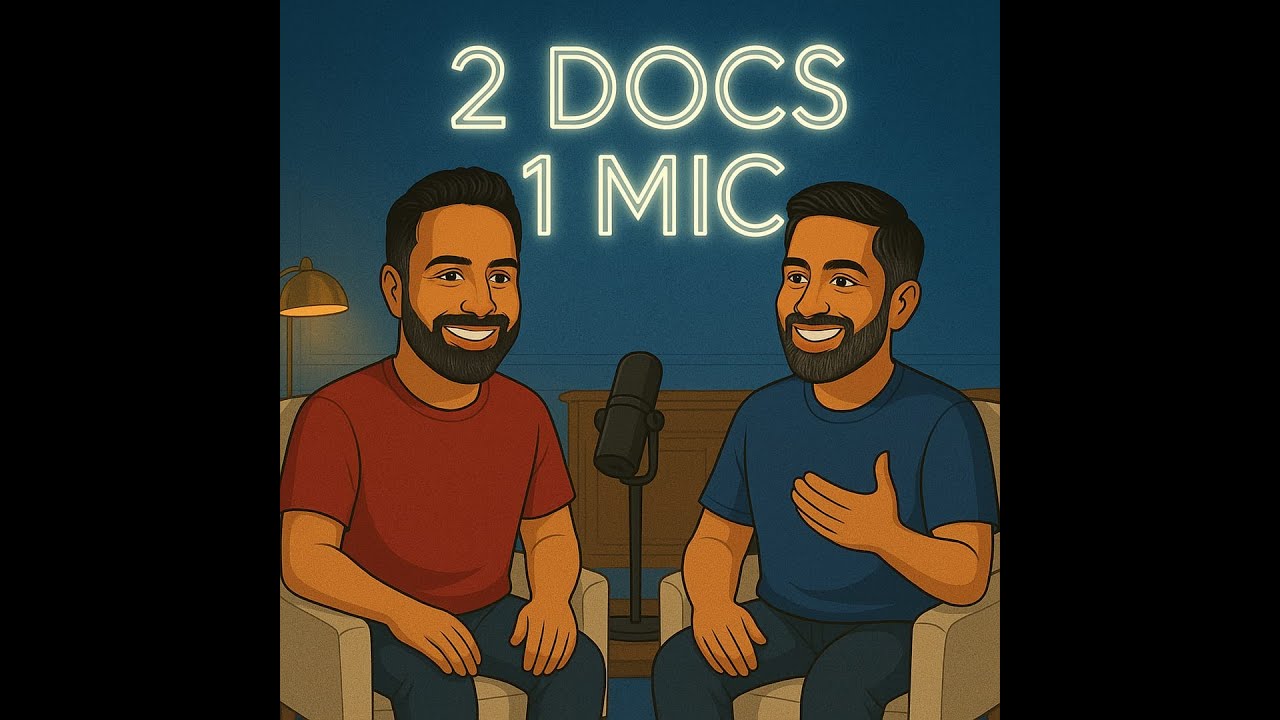
Your hosts