Too Busy, Too Digital, Too Alone?
About this episode
Dr. Naqvi and Dr. Ahmed open up about parenting in the digital age, debating whether they'd want their kids to follow them into medicine and how to spot a child's true strengths. The conversation turns to how smartphones, social media, online gaming, and dating apps have eroded real human connection, shortened attention spans, and fueled loneliness, anxiety, and even AI chatbots being used as risky substitutes for mental health therapy.
What we cover in this episode
- should your kids go into medicine
- how social media affects child development
- smartphone and screen time limits for kids
- boredom and creativity in childhood
- dating apps replacing real-life connection
- AI chatbots used as therapy and the dangers
- declining masculinity and risk-taking in young men
- short attention spans from TikTok and short-form video
- loneliness and isolation in a hyper-digital society
Full transcript
It's been a transition, you know, like anytime a kid is in a new school. Um, you know, they don't have the same teachers, the same friends. It's a new environment, especially as a little kid. I mean, it can, you know, their anxiety level goes up. So, the last couple weeks have been a little rough for them, a little harder. >> Yeah, that's Yeah, that can be any change at that age is tough.
You know, they're when they're used to a certain environment and say same place, same teacher, same kids around them, they feel comfortable, they get used to that. They have stories every day. >> Oh, totally. There's a change, then they're a little nervous. I think they feel just like we feel nervous. I mean when we go into a new place, new environment, starting a new >> new class or new uh job or whatever, we feel nervous too. I mean it's it's same as them.
I mean I stood in uh I think today the traffic was uh you horrible in this morning for drop off. Today was the first day of school and I I took the morning kind of off you know not really off but I had a delayed start. I blocked off my schedule in the morning just so I could go with him. >> So you could take him. Yeah. >> Yeah. So I could take with him. of me and my wife, you know, we both um took him to school and we stood in the line forever. Forever.
I mean, the summer was three months long or two months long, but for for whatever reason, they decided to do construction on the street today. >> We were we were in the >> Yeah. Why time it better, you know? >> Why? Yeah. Just the first day of school. Let's just start putting like, you know, excavators through the street. >> They really wanted to make sure every kid gets a tardy slip on their first day. >> Yeah. But, you know, Yeah.
It's it's funny, you know, see uh them uh starting their new day uh going in all excited and I I'm like, man, he's just starting. He's not even in kindergarten yet. And uh he has so many years ahead of him, >> dude. I know. >> If he decides to become a physician, that's uh another lifetime of probably another another 25 years that he'll have to >> Yeah. Well, we'll see you in your mid30s, bro. >> Yeah. >> But that's a you know, it's an interesting question, right?
Like what do you think about that? I mean, as as a doctor yourself, obviously, um, what do you think if your son wanted to go into medicine? I mean, is it is it even something you'd want him to do? Is it something kind of just on him? You're happy with whatever. Would you encourage him, guide him, sway him one way or another? I mean, how do you think about that as a career path? >> It's is it tough as a parent, right? You want the best life for them.
You want to provide for them, and you want to make sure they uh even after you're gone and not a big part of their life, they have a comfortable, easy uh life. they they make something of their lives, they accomplish things, they they make an impact on society. You you wish for all those things, but I think there's many other ways of making that impact.
I mean, honestly, our uh parents and generation before us, I mean, a big emphasis in immigrant households, as you know, was, you know, you either got to be a physician, uh a lawyer, an engineer, and those those were the three options. >> Yeah, for sure. Dude, my brother and I would always joke about that. We were with our parents. It's like, well, you're you're allowed to do DBLE, either a doctor, go into some business, be a lawyer or an engineer, and that was it.
You had four options if you were in an immigrant parent household. >> Yeah.
Even the business thing is a little little uh you know um some some families emphasize that you know uh starting a business or some families don't but you know there were very few options for us growing up and you know we knew that our our our parents thought and maybe it was this way maybe they were right that the only path to success for us first generation kids is is to be in one of these prestigious field where we do get a lot of education but I think uh the paradigm is changing now I mean you know I think we've talked talked about in the past that school education training would not be the same what it used to be.
It's not going to be the same idea of going to school, listening to a teacher, you know, talk about certain topics based on her knowledge, her research and teaching the kids and then them going and applying those topics and doing a test based on what they were told by their teacher. I think the whole uh narrative education is going to change.
Now as as per medicine uh you know there's a lot of good things about medicine a lot of bad things about medicine um >> there's some days I'm very thankful to be in this field and I I would want uh my son to be in this field and you know practice medicine and but then the the constant uh you know administrative task that we have to deal with the the constant pressure the mental health load I mean sometimes I'm like maybe he'll be better off not not going into medicine you know it's tough.
It's it's a very rewarding field. It's a rewarding career. But uh you know I don't know if I can just recommend this profession to my kid. >> Yeah. You know I and I bet like any anyone in any field probably feels along those same lines about their craft and if they would want their kids to do it right. I mean whether you're some type of professional like you know a doctor, lawyer, whatever. If you're an athlete, if you are a chef, whatever your career is, right?
Like you know the ins and outs of it. You know for your personality what you like about it, what you don't like about it. Whereas someone with a completely different minds, a completely different personality may love the same things you hate about that, you know. Um so, you know, I I think it's really difficult. Even though I asked you that question, I'm like thinking about it now like would I want my son to go into medicine? I mean, it's it's so hard to say because I don't really know.
He's he's currently he's only 3 years old and it's it's so hard to know what kind of person he's going to grow up into and what his you know personality traits are going to be, what his natural tendencies are going to be, um what he's going to be drawn to. I I certainly think, you know, what you were saying earlier, that um I'm probably going to be much more open than my parents were in terms of what careers I'd be totally fine with.
I mean, as long as my child is doing something tangible, something legitimate that I mean, obviously, you got to have some, you got to be pragmatic. You got to have something that pays the bills, something that is going to cover your finances. That's just a reality of life. Um, and then something you like, something you enjoy because when you enjoy something, your heart is in it. You devote your mind to it. You don't get sidetracked. You don't get lazy at it.
And that's how you progress and you find creative avenues. You can build something that's new. Um, take it into a different avenue. Um, so I think I would be totally fine really regardless of what path he chose. But it, um, you know, my parents never told me to be a doctor, to do medicine. Neither of them were physicians. Um, in fact, no one in my family is. Um, most people in my family were engineers.
Um, but they they obviously were very excited when I told them that I'm thinking about going into medicine. It was a big deal for them. Um, so it was some amount of pressure, not necessarily to just be a doctor, but to do something like whether I went to law school, med school, became an engineer or something like that, but it was very strong uh pressure that I felt because I wanted to make my parents proud.
Not that I was not in a negative way, not that I was like pushed or, you know, guilt tripped into it, but I I really wanted to make them happy by doing that. >> Yeah. But the emphasis was always on something more education, math, science >> definitated, right? That was always the focus. But you know, so many kids we saw, you know, you probably saw them in college as well.
So many kids are forced and boxed into this idea of going into something that's math and science related, whereas humanities or something more uh creative was their true skill set.
I mean there's so many people that were just way better at creative writing and uh they were just never able to pursue that because because their parents told them hey that does not make money which you know uh which yeah some somewhat true sometimes but uh you know the the parents always told you that you know fields such as medicine engineering something that's that's more practical is what's going to give them a better career but I think in our generation the thinking uh more is that >> hey if you can do something to to the best of your ability and you do it really well, I mean you can be very successful, right?
I mean there's there's people uh that we know now that you know who have gone into journalism or or media personality podcasters you know uh uh or >> meaning not us real podcasters. >> Yeah. got us real podcasters, people who are actually uh doing something with podcasting rather than us just, you know, >> spending Wednesday afternoon in the cold office, >> right?
>> But you know, chefs, I mean, I have high I have so much respect for people who have that creative ability to create a amazing dish, right? >> Dude, that that is that is so true, right? Like this is a restaurant that you've recommended forever.
I finally I went to Theodore Rex yesterday u for dinner and you know like I just don't understand how these chefs they come up with these dishes like it's stuff that I've never heard of or even thought would be mixed together like these dumplings would like wag you inside them that were made in this mushroom broth. I was like I would never think in a million years to put that together and it tasted phenomenal. It was so good.
And they have that dish which is just like these uh onions that they uh like put in this milky sauce and it's just onions and this milk uh sauce that you just eat and it's just like whoa this is >> and never would I think I mean like the only time in my life I eat onions is if they're just in something caramelized or like it's in a burger. Like I never eat onions otherwise. But yeah like some onions in that milk thing I don't even understand it. It is so good.
But just like not to sidetrack too much. I mean that restaurant is amazing. Um, but like the creativity that comes with knowing, you know, putting all these different things together, it's almost like chemistry in in a in a meal, it's really remarkable. I I don't have that kind of creativity at all in that way. It's it's amazing. >> Yeah. It's, you know, um, our parents kind of had this idea of motivating us, motivating us, you know, towards education, like, you know, um, get good at math.
I remember I was not uh you know in my first or second grade I was not very good at math and math was you know one of the things I struggled with and then my parents got me a math tutor you know and the math tutor kind of made me uh you know kind of clear up some concepts I got so good at math that I was the top of my class in math after that and going forward math was was some of my strongest point uh subjects or topics that I was studying right uh >> and you were you were a mathlete >> I was a mathlete but >> a mathlete baby >> if I was struggling with maybe uh writing or creative writing or you know English uh or you know reading maybe I don't know if they would have been that focused on getting me a tutor for that because those kind of fields were never emphasized but I think as for us as parents with the the way things are going and how the world is about to change I think in a big way uh I think the key will be understanding our kids strength you know what are they good at what what do they excel at which is the best what are some of the skills that they can use uh to to master and become the master at that craft.
Finding those out for them and helping them find out independently and then kind of helping them achieve those those those skills and mastery of those skills. I think that'll be the key and that I hope to achieve as a parent as well. >> Yeah. Yeah, I mean that, you know, that would be like finding the golden fleece. Um, you know, is is actually identifying at a young age what your child's strengths are, what the weaknesses are, and steering them appropriately. It's so tough, right?
And like I think parents, I mean, so many parents have the best intentions. Um, you know, just like, you know, the cliché like those dads who are like grilling their kids about sports or making them run suicides when they come home and they start lifting weights at a young age. They make them do push-ups all the time. They do drills, throwing football, catching it, running routes when the kid's like seven years old. Um, they're doing it because they want their kid to succeed.
They want their kid to be awesome. And some of it may be like they're trying to live vicariously through their child and they think their child has some athletic prowess. But a lot of those kids, I mean, I'm just using that football as an example who are like drilled and kind of forced into it at a young age and do it again and again and again and make it part of their life. A lot of them just like burn out in terms of their desire to keep going and they drop out of it.
I mean, I knew a bunch of uh a bunch of kids that were in school with me that were like awesome awesome athletes. They had college prospects, scholarships, all this stuff, and they just didn't want to do it anymore. I mean, they were realistic. They knew they would probably never get to the NFL. They're good enough to get a full ride at at a good school. They just didn't want to do it. They were just sick of it. It was done for for them. Um, and I think academics is a lot of the same way.
you know, if you're just so much drilling in kind of what you're talking about, forcing a kid to go so strongly into STEM stuff, getting them after school tutoring with math and science, putting them into summer camps, focusing on this kind of stuff. Um, and they're not bent towards it. They they would rather be doing, like you're saying, creative writing or literature or history, whatever it is. They're art they're artistic. They want to do music.
You're not really letting them flourish in the way that they want to. Um, and yeah, they may have a natural aptitude and get good at doing math or or being good at biology, but they may not love it and it may kind of sour their taste for it once they get further along into college. >> Yeah.
I mean, as a dad, it's it's it's it's a very hard balance, right, to find out to kind of know that line of when you're like motivating them to do something or pushing them towards a field that you think they're good at versus pushing them towards a burnout in that state, right?
I mean, uh, when are you pushing them to start hating something that, you know, you push them so much versus just giving them the right nudge be like, "Hey, like, you know, you're really good at uh, you know, piano and why don't you pursue that more instead of taking them to piano lessons two or three times a week where they got they get a little uh, you know, burnt out by it." I I kind of noticed that with with Aslan where uh, you know, we were doing swimming lessons twice a week and you know, he was excited in the beginning.
he was learning and really good at swimming and then he kind of started dragging his feet a little bit. Two lessons a week he's like h swimming you know and then we just kind of backed off and then he took a break from swimming for two weeks and then he was just excited to go back into it.
So I think it's sometimes we lose the sight and we get so um you know so focused on finding activities for our kids all the time that we sometimes don't realize that we're not letting them be bored and miss certain things. Right. I mean, you know, even as as toddlers or even as preschoolers, >> um, and now schoolgoing kids, we always want to want to keep our kids busy, you know, oh, hey, he's just sitting around.
Uh, let's give him some some Legos and let him play with Legos or he's let's let me do an activity for him. Let me let me sit down with him and actually play with him. But sometimes kids come up with the the most creative uh things when they're just bored. And boredom is a a key to creativity, right? Yeah.
And becoming okay with boredom and finding your own way out of it rather than being given something, you know, like then you're never really like using your own brain creativity to escape that so-called boredom or escape that idling. Um, if your parents or your teacher or your tutor, your after school extracurricular coach is always the one doing something and putting you on a regimen, putting you on a schedule, you're always I'm going to do this, then this, then this, then.
if you're so regimented at a young age. I mean, you know, like the last time I looked up these statistics, it was quite a while ago, so maybe it's a bit outdated, but like this was a few years ago, but like South Korea, for example, and Japan are two of the countries that have some of the highest rates of young children with anxiety, depression, and burnout, and even suicide um in teenage years. And a lot of that is attributed to basically like their schedule is so so regimented.
These kids are waking up at like 4:30, 4:45 in the morning and they're doing like either violin lessons, piano lessons or swimming or something and then they're going to school and they have like a very strict rigid 8 hour, 9 hour school day. After that, they go do some extracurricular sport. After that, they come home and do homework. Then they have a tutor that comes in and gives them extra prep, extra materials to do.
And then they finally get to chill out for like an hour before they go to sleep. I mean, that's really like not a life of a 5-year-old child. That that's more regimented than my life. >> Yeah. We're not letting kids get bored enough, you know. Uh I think uh growing up, you know, and I see this is a trap that we all fall into, right?
We see someone else, oh yeah, they're doing swimming lessons, they're doing gymnastics or they're doing karate or they're doing, you know, uh uh fencing or you know, whatever activity and then we're thinking, oh, we should be doing that for our kid or we should be taking them to Kuman and we should be uh getting a tutor for, you know, uh Spanish.
and you kind of fall this trap where you're just kind of forced to keep up with the other people, other parents and what they're doing and then you you realize that you filled up your child's complete schedule and there's no time for them to be bored. I mean, I remember as a kid I would this was my childhood.
I mean, I would I would, you know, go to school in the morning, come back from school, maybe work on some homework, maybe watch a little bit of TV, and then just just go outside and meet up with friends and just be on the streets playing. And sometimes my parents won't even know what street I'm on or you know it was things were maybe much safer or parents were a little bit more uh you know uh trusting of the surroundings and the neighborhood that they let you out and just go be on your own.
Some days we would be going out and playing some you know sports and whatnot. And some days we'll just be goofing around in the neighborhood getting in trouble or running around or sometime ding-dong ditching or whatever you know but >> a lot a lot of doorbell ditching. >> Yeah. Like so we like we just kind of did this fun stuff and got bored and came up with creative ideas.
Sometimes got in trouble and that's how you learn how to kind of interact with other kids, get into fights and maybe solve those solve those conflicts. Um you know we you learn perseverance that you know you you are bad at a sport and you're playing with your friends and you you are bad at it and then you you they start making fun of you and you work on getting better at it. So you >> cultivating cultivating trash talk is a very important skill to learn. >> Yeah.
And and and for some reason now I think we've regimented our kids that they don't have that time for outside play. The play where they just unstructured play where they go out with their friends and just play or do activities on their own.
And that's I think having a negative impact on uh a lot of younger kids where they don't where they're not developing those social skills, how to interact with their peers and how to uh resolve conflict and how to persevere, how to stick with one activity and try to master it and be focused on it.
The attention span is is is also shortened because they're used to doing so many things in one day that it's hard for them to maybe focus on one thing and just uh you know stick with it and try to get better at it, right? Yeah. No, for sure, man.
You know, another thing that's interesting, I think I mean, you know, when kids are like like 2, three, four years old, they're really little, but like especially as kids get a little older, um, you know, like when we were growing up, kind of what you're talking about those stories, I mean, I think anyone who's listening who grew up in like the '9s, um, early 2000s can relate. Like, there was no ability to really track your kids.
Like, there's no parent that knew where their kids were cuz no one had smartphones. There was no geot tracking. He was just like, "Hey, mom, dad, I'm going to go hang out with my friends, ride bikes, whatever. I'll be back when it's dark and we'll have dinner." Um, and you know, it was like a normal thing to routinely hang out without parental or adult supervision close by.
You were just kids by yourselves, you know, give or take a few years here and there, but just a bunch of kids hanging out doing kids stuff. Um, but nowadays it's so much like you are just one click, one button on your smartphone away. one button on your Apple Watch or whatever away, you're really like constantly in this aura of supervision. And you know, you're not really like being free to be a kid except when kids are interacting with each other like online.
Um, that's often one of the first and only times even through like teenage years that a lot of kids are basically in a setting where they're interacting, texting, talking, posting, and all this stuff. they're they're interacting in this medium in social media on all of these apps without any adults around and that's a very impersonal interaction um compared to an inperson real life interaction.
You know there's like we were talking about this a little bit offline but like there's a disconnect when I'm texting about something or posting on social media without looking at someone face to face. you almost like the online trolls. That whole like mindset is that you're protected from any recourse by talking trash online or making fun of someone or bullying someone online compared to doing it in real life.
I mean, people are much less likely to be as aggressive or vile or vulgar or mean-spirited in real life, face to face, than they would be with kind of that just disconnect that you're doing it on a screen, whether you're a laptop or your cell phone. And I think that's like a very common way that kids nowadays are interacting without adult supervision, but it's like it's almost I don't want to say artificial because it's real. It's happening.
But it's not how the rest of human society up to this point has grown up. The rest of human society grew up with kids being kids around each other kids each other not just adults supervising them at all times, knowing where they were at all times. So I don't know really the consequences of that. I I personally don't think it's great.
Um >> but I I when you're interacting when you're interacting online, uh it's you don't see the person's person's facial expressions, you don't see their if they're hurt or they're excited or they're angry or they're sad about it. Uh you you can say whatever you want and just in your tone, maybe in your mind, you're just like, "Oh, this is this is just, you know, trolling or we're just having fun.
We're just joking around." But you don't get to see what the other person is feeling or how they're reacting. And you might be hurting someone's feeling when you're saying some some t doing some trolling online, but you just don't care because it doesn't really affect you, right? That's not >> Yeah. You can't see the reaction immediately. And it's not organic, right? Like in real life, you know, you have a response and a counter response right then and there because that's what's normal.
It's not calculated and you think about it, you ruminate on it, you write a text, you delete it, you change a word here and then there, then you finally post something. That's not like a normal human interaction in an inerson setting. Um, but that's really what like the social media sphere is. Very little of it is instant spontaneous. Most of it is like calculated, curated, edited, and then finally put out there. Yeah.
That whole uh playing outside, going out on the streets and playing with kids a different age group. Like, you know, sometimes I'd remember going out and playing with a kid that was maybe four or five years older than me versus and and maybe a kid that was two years younger than me. And you'd learn from all of them about how to do certain things or about certain things about life. You know, you some of the older kids would say certain things.
You're like, "What are they talking about?" And then you would you would look it up. You would kind of ask someone else or, you know, maybe too embarrassed to ask a friend and uh you know, you would kind of try to figure out from someone else unrelated. Hey, what is what is that? I heard about that. >> You learn things, right? So, I think that whole interaction has kind of moved into online gaming now.
And so many kids are spending so many afternoons just uh connected to a headset and a video game set and they're just playing these online games where they're trash talking and saying things and but with complete strangers and that complete stranger on the other end could be a 35-year-old guy and you know that's playing and be saying whatever to your kids. >> Uh but uh you know that's that's that's not a natural interaction.
a game where you're shooting or roleplaying uh certain characters and you're they're not your true friends. The people that you're playing with on the other line are not your true friends. Now, there could be a point where you're playing with your own friends from your school, but that's still not organic interactions like we used to. And this could be something like, oh, back in my day, we used to do this, but you know, human interactions were never supposed to be digital.
And now, this is a whole new frontier of how kids are developing. A lot of kids don't don't know how to talk to the opposite sex anymore. I mean, a lot of the young guys don't know how to uh you know, talk to a girl, uh maybe ask out a girl for on for a dance or uh to a homecoming dance or to prom or even out on a date. I mean, a lot of young people in college don't know how to ask a girl out for a date.
And a lot of girls now feel weirded out if a guy walks up to them and asks them to maybe go for lunch or a coffee date with them, right? That's not something that's actually useful anymore. But >> um back when we were in college, >> yeah, I mean that that's like all the like the masculinity stuff, right? And you know, you can take that in the extreme, you know, with people the so-called manosphere who are like in a very kind of vile way trying to in their mind take back masculinity.
um but they're doing it in a very chauvinistic and demeaning way to women and that's like a reaction to what you're describing right that for whatever reason I mean no one really knows why but that yeah there has been kind of a stying of masculinity in society and men are not brought up the same way you know what I mean like um you know it's crazy like the other day I was holding a door for someone like because I was walking in front of them and I looked back and there was a girl walking behind so I hold held the door and She didn't even say it in like a rude or mean way.
She was just like, "Oh, I don't need you to hold the door. I can do it." And I was like, "Okay, that's fine. I mean, all right." Like, it's not something worth getting an argument into. And it wasn't even like a uncomfortable conversation. It was just kind of odd. I was like, I waited an extra couple seconds to hold the door for you. I probably would have done it if it was a dude behind me, too. It wasn't just because she was a woman. I think it's just a polite thing to do.
Um, but like little stuff like that. Um, I don't know. I I think that there's definitely been a change. And even if you look now, it's like statistics, right? Like the current generation um is having less um sexual encounters in their teenage years in their early 20s u by far than generations in the past. Um so that that is definitely something that has changed. Um similarly like rates of alcohol consumption have gone down in the current generation compared to generations prior.
I mean there's probably a strong correlation between the two, right? like alcohol partying, inhibition loss, and um getting in bed with somebody. But like basically impulse control and making, you know, so-called bad decisions, but more so like adolescent, young adult decision making in that environment has changed. It's changed completely. People either aren't putting themselves in that situation or it's much more guarded. >> Yeah.
you know, a big part of uh and this might be, you know, uh I was reading this article about how uh you know, uh back in the day, a lot of men were associated with taking more risks than usual, right? They they they were known to be the ones that maybe uh went on to venture into a new area without in supervision knowing what's coming or you know investing money into a business that they did not know uh is going to succeed or not.
So um taking those extra risks uh was being part of this old school manhood, right? Uh and part of that risk was also courting women where they would go up to a girl and you know ask them to maybe go out on dinner with them or go go for a coffee and and and that whole idea of taking risk has uh completely gone away where people in general like men or women are just more scared to take risk now.
you know, the idea that uh you know, a guy um what a guy thinks now that when they go up to a girl to, you know, maybe ask them out on a date, uh they would come off as creeps, right? Uh or or maybe come off as someone who's desperate, who cannot find a woman on their own. Uh you know, just and and and women might, you know, also be awkwarded out by someone who just comes up to them because the the those traditions have changed.
Now it's much more easier to find uh someone to date or go out on a date with through apps just by swiping.
And and there's clear stats on that where people used to meet uh uh each other uh in neighborhoods or churches before and that uh and then people used to meet in workplaces before or uh at school before and now they're mainly majority of the couples are meeting on on social media or apps which is a huge change and that change has happened in the past uh >> uh you know I'd say 15 years I mean when I there was no apps so I completely skipped this whole app generation.
I never got to do that or never had to do that. Uh but uh >> you you weren't a rapid right swiper, huh? >> I was not I've never I've never downloaded one of those apps cuz I just don't know how those work anymore or I just never learn how to how those work. But this was this is so new that even me relatively younger person who hasn't been married for that long you know has not used those apps. So this is a very new phenomenon.
Over the past uh you know 10 years or so this has just completely overtaken and is now the majority. Uh >> yeah it's the dominant form of meeting someone. It for sure is >> so >> yeah I I think it's interesting you know it's like I mean it's almost like small talk and the ability to engage in like a non like aggressive non-anxietyprovoking random interaction like a cold encounter has just totally died. Like if you get an elevator nowadays, everyone stands in the elevator like this.
>> You know what I mean? Like, and it's not like great conversations are had in elevators in the past. It's just like everyone is just plugged in all the time. You know, you're standing in the TSA line at the airport, right before you got to like do the buzz thing, everyone's just on their phone, you know? Like every single setting where you're idling, even for a few minutes, you're waiting in line at your Dunkin Donuts or whatever coffee shop, everyone's on their phone.
I mean, I remember when I was like a teenager or even early college, like I had like a little flip phone before I finally got an iPhone. Eventually, there was nothing on it other than the ability to text and make phone calls. And a lot of people were in that situation. I mean, you would regularly just kind of chat casually with whoever was in line next to you. It was like a normal thing. I would be at the grocery store and you just like talk to someone who's waiting in line.
I mean, the person in front of you has 40 items in their cart. You're going to be sitting there for 5 minutes waiting. You might as well talk to someone rather than just stand there. But now you have an alternative to boredom. You literally have access to everything in the world on your phone. So people are plugged in. And I think it's kind of like your social juice, right? Your social battery. I like anything that human beings do. You get used to it and accustomed to it. You build habits.
It's practice. You practice talking. You practice engaging and you lose practice in that. You get out of so-called social shape. Um, and you're much more hesitant or nervous or just not used to being approached by someone or vice versa doing the approaching.
I think that's definitely a real I mean, I remember when we were younger, like me and my friends, all of us, you know, when you'd go out and stuff, I mean, we would like mess with each other like, hey, you know, like that girl's really attractive, like, do you think you could go talk to her? It would crash and burn all the time. None of us, we wouldn't pretend like we were awesome, had game or whatever. Just it was just fun to do and like it wasn't off-putting. We didn't do it in a vulgar way.
It was just you were just young and you're trying to, you know, get interested with someone of the opposite sex. It was a very normal thing. Um, but that doesn't happen as much now. I mean, people are just worried or anxious. >> The people who do that, people who talk to you in the elevator or in a grocery line or uh at a club or bar, like, you know, they're considered kind of creepy or intrusive now. You know, that's what a lot of people have started to have those thoughts.
Or even your Uber driver, right? I mean, you know, the whole idea of like, you know, your Uber, you're riding in a car with someone and some people just prefer not to talk or engage with that's just insane to me, right? I mean people and even some >> it seems rude. Like I I I feel rude if I'm like just sitting there quiet like scrolling on my phone for 40 minutes from the airport to wherever I'm going. I feel like obligated to talk to the person, you know. >> That's truly an option on Uber.
You say that you know talking or >> which is crazy. >> Which is crazy. Like you there's a guy who's driving you and you just don't want to even talk to him and learn about him. And sometimes the Uber drivers themselves have headphones in and they don't want to talk to you, >> you know?
they just want to drive you someplace and and just uh and that's just the how the just how much we do not prefer human interaction anymore and now uh you know with with AI coming in a lot of people are seeking even mental health and therapy through AI you know it's a whole phenomenon >> yeah I think that's like horrible that's just my knee-jerk reaction you know when I first read about that I think it's like you know these AI so many like what are they using they're using like chat GBT or like Perplexity or Gemini or whatever.
I mean these like mostly free services that you can pay for some advanced version, right? I mean they are conditioned to give you a response. Like the primary goal of all these things is to give a response. It's not necessarily to give the best response and they've been found study after study after study that they are inaccurate.
They will fabricate information just to give a response and the data is not always generalizable and people that are relying on them as their actual psychiatric therapist. I mean that that could be very dangerous, you know, on superficial fluff stuff. It may give you something that sounds reasonable, but like can it really delve into deep emotional issues and, you know, like help you work out trauma and stuff? I mean, I I would be very worried. >> Not it's not just that they're not effective.
It's they're harmful because there are definitely reports of them um you know enabling someone's psychosis and you know there's people because what what these platforms are meant to be or some they they have been designed or the way their algorithm is working or the way their uh the large language models are working they're kind of agreeing with you and perpetuating what you're saying.
So, a lot of people that are talking to them about their uh, you know, their psychosis or visions that they're having or sounds that they're hearing in their head, the the AI has been perpetuating it and maybe encouraging it and enabling it and then and putting them in a deeper psychosis and and there's been reported uh uh suicides as well based on that.
Uh I've read I read this article recently on New York Times about um you know um people who commit suicide and then when parents went back or they found their chats with their with their uh AI software which found them to having these uh these psychotic thoughts and chat GPT or AI or whatever software they were using did not do anything to help or uh reduce those but they even perpetuated agreed with them and then enabled them to even think deeper into that fall deeper into that cycle. psychosis.
So this whole idea of you know um you know finding comfort or human uh touch with AI is very dangerous and can be can be hurtful for a human emotions. You need a professional a psychiatric professional to kind of talk to you and a human to kind of you know feel a connection with rather than a computer to talk to. >> Yeah. I mean it really like emphasizes the artificial part of artificial intelligence. It it is still not like a real human thing.
no matter how much it might sound like it when Chad GP types its response to you. Um, you know, and I I think in a bit in a way, it kind of hearkens back to the episode we did specifically more on AI. It like the liability like how are these companies not liable for something like that, you know, identifying a potential red flag and not only not reporting it or, you know, alerting someone something that this person is like on the fence, but enabling it further, right? That that's crazy.
You know, like if that person, God forbid, you know, like had called a suicide hotline and the person on the hotline was like, "Yeah, you're right. These crazy thoughts you're having are that is wild. Yeah, it might be a conspiracy." You know what I mean? Rather than calling the local 911 or something, that person would be like up a creek. Um, but it's not the same thing.
You know, I think that whole like issue of liability regarding AI and the consequences of what these algorithms are saying and doing and their own data sets that they're trained on to give those responses, that's a huge thing that hasn't really been talked about in the main sphere of society. I think it's a big issue.
>> Well, all they have to do is write below there that you know a lot of times uh these algorithms can be wrong and don't use it as a medical advice or practice and you know that all they have to do is just that statement in there and that's their liability. >> Yeah. But, you know, like I I don't think in real life there's any such thing as a blanket statement.
You know, it's kind of like every patient I do surgery on, they sign a consent form that even if an earthquake hits the hospital, like they'll be okay. You know what I mean? Like, but just signature on a consent form that happens to list every known possible complication, permutation, still doesn't protect you if something heinous occurs. >> Yeah.
But is this is this the cause of all the ills in society or they should say or this just one of the symptoms where people are so isolated and so lonely and have minimal human interaction now that they're kind of feel more comfortable talking to something more artificial. Right? I mean uh >> or maybe it's the only the only route they have. It may not be comfort. It's just it's the only thing that some people might have.
The other the other crazy data I read uh recently was the average age of a of a someone of someone who watches porn is now 12 years of age. >> 12. >> Insane. Uh you know, a 12-year-old is now uh being enticed with these free pornographic videos and images. Uh and >> that's crazy because that's average. I mean, that means there's people way younger than that to balance out the the bell curve, right? >> Yeah.
Uh and and that's that's insane because now a 12-year-old kid can fall into that uh you know that that trap and kind of get stuck in there and never truly have any human interaction and not even seek it because just because they're feeling satisfied in a certain way that they not even motivated to go out of their way and they're evolving that way. Their brain is growing into that kind of conditioning where they don't even need feel the need to go out and seek another partner. Right?
that as biological beings we're we're made to seek a partner uh whichever um way we can to reproduce or mate or be with in the future and now that that that need or desire is going down. I mean you you've seen the stats in Japan.
I mean you know a lot of things in Japan they're they're also having very few uh sexual encounters socially they're more isolated and the anxiety and depression over there is much higher because of a lot of the times people have isolated themselves and and replaced a lot of the personal needs they have with technology or you know toys uh which is scary and that's kind of where societyy's moving where we don't want more human to human interaction. Yeah, I it is sad.
I mean I and I do think, you know, I'm going to sound like a dinosaur saying it, but I think social media has a huge part to play. I mean, it has great effects, too. I mean, it has I mean, you know, the connectivity, but also like making the world overall aware of what's going on elsewhere in the world and not relying on just mass media.
I mean there's so many positives of social media obviously but like on a day-to-day basis people are just plugged in and it has eliminated real life interaction in a large way and you know rather than like for example I read something interesting in an article somewhere and I come home and I talk to my wife about it we discuss it we have opinions blah blah blah now I'll just like share it I'll send it in a Instagram message or something to her she'll give it a double tap heart like and then be like wow cool or haha crazy and like I'll do the same thing when she like but that's not like a real we haven't really communicated interacted interacted in any meaningful way on that we've made no real connection we've made no deeper thought we've had no next level thinking using this as a source to then have a real conversation and a real human interaction and build and continue our connection and the same thing in like friend groups like we'll share a random WhatsApp group and we'll send like an article or a link or a video or something it'll get a bunch of likes And then that's kind of it.
It just fades into acknowledgement. That's all it is. It's not real discussion as much as just okay, you sent it. I will acknowledge that I have seen this. And then >> sometimes people just don't even look at the article. They just look at the topics and like they just react to that. Right? That's that's they're they're not even diving deep into what you're trying to tell them. They're not reading anything about it.
Maybe a paragraph or two and then they're just giving their views and maybe just acknowledging it. and something you wanted to share. You personally felt that you shared with a bunch of people and your friends, but no one ever really read it or saw it and and and and thought about what you were trying to tell them, right? So, um you know, the quality of human interaction, social media has a has a huge part to play, right? The social media along with what happened in 2020.
I mean, in 2020 in COVID, that was a scary time. I mean, a lot of us were isolated. We kind of leaned on these things and at that time it was kind of nice you know we 2020 we were all kind of uh trapped in our apartment. Some of some of us mean you were in the hospital still seeing human beings but there were a lot of people >> that were just had no interaction with other human beings and some at that time those those zoom interactions with your friends were nice.
you could just sit there and have a conversation with them uh through Zoom and that felt nice. And then people just after that the work from home culture just took over, right? And so many people went work from home where they're now not even interacting with other people outside their uh outside the people that are living in their homes. They are not meeting new interesting people. They're not having those uh water cooler conversations.
They're not uh sitting down and going to lunch with their colleagues. Um, and and the whole creative spark that comes in when you interact with people that are different than you, that just went away and we all became these creatures that just stay in front of screens and and do what we're told to do and just log off and that we're done and we're back to our families, right? Those interactions that guys at work used to have with other guys or people used to meet and date at work, right?
People used to uh make lifelong friends at work or at school, that's not happening anymore. Uh, >> yeah, man.
I mean it makes you think you know like kind of what we started the the episode with about parenting right and would we want our kids to do blank career this career even before the career I mean it's it's an even more pressing question especially our kids are you know Rayan is three Asan is four like how do you when do you do you expose your child and allow them to participate in social media I mean it's almost impossible not to like to be a human in 2025 um it's just so common and it's almost necessary in in order to have social groups blah blah blah be aware of stuff but when is it safe and how do you like gradually introduce it and at what levels do you introduce it I mean I I don't have an answer to that question I think it's so challenging I've thought about it a lot you know like and a couple things that I have saw recently I mean one is like in Texas right now there's that so-called ban um of social media and smartphone usage in schools that just came through the legislature which I think is a positive like let kids disengage from that while they're at school, but that doesn't stop them from using it when they're at home um or anywhere else.
Um I don't know. It's a thing that's on my mind a lot. Like, you know, once Rayon's friends all start getting smartphones, if they start getting it, I don't know, five, six, whatever, and he doesn't have it, he's going to be the odd one out. I think that's a very young age to be on something like that and exposed to whatever the heck is going on on the internet. Anything you can access, I I think it it creates a situation that's more dangerous than beneficial.
Yeah, I mean that's a tough thing, right? How do you uh you know that now uh schools uh are some schools are restricting phones but some schools people kids can take their phones too? I mean when you have Tik Tok in front of you with 30 secondond videos or 20 second videos every with a swipe and you can just go into the rabbit hole of watching Tik Tok videos. How are they going to pay attention to a boring lecture? Right?
I mean, our attention spans have gotten so short where we're living in these 20 30 second video clips. >> Um, there's no way. Sometimes I find myself even, you know, I'm watching a movie which is maybe 2 hours long and um when the movie kind of has a down phase, I start like just scrolling on my phone. >> Yeah. The doom scrolling. I mean, yeah. >> Right. The doom scrolling is so bad.
And I I who am I to teach my kid when I'm I'm doing all the wrong things myself where I'm getting on my phone during a movie and sometimes those those movies are pieces of art, right? And they have these fa this these scenes that are meant to be paid attention to and uh the director was trying to tell something through those scenes and you're just scrolling and not really even engage in the movie as much. Uh our attention spans have gotten so short.
I mean that's why I think I mean you know when we talk about screen time for kids I I I I think watching a long form movie like a 35 to 40 minute show or uh um a a two one and a half hour long movie is more beneficial to kids because they they learn how to uh you know pay attention for an hour and a half.
They take some lessons out of the movie or TV show versus like these 15 10 minute short videos that kids watch, they get the dopamine hit and they forget and then move on and they watch another episode. Right. >> Totally. It turns them into honestly just like very short burst acute pleasure-seeking little monsters. Like they're just going from dopamine spike to dopamine spike to dopamine spike rather than actually being forced to make their attention span stronger.
Like the idea of focus, focus isn't just something we're born with. You have to train and learn how to focus. And kids cannot focus if all they're doing is one YouTube video to the next, one YouTube video to the next. Even if, you know, it's an awesome video. Like I love Miss Rachel. I think she's amazing. Um, but just going from one 3 4 minutee video with songs, sounds, dances to the next one. Cocol and Peppa Pig, all this stuff.
Or even like kids who they want to watch a movie and then they're like complain, oh, I want to watch this or I want to watch this. No, you said you want to watch Monsters Inc. We're watching the whole thing until, you know, you want to get up or you're done doing whatever, then we'll restart it tomorrow at the same spot. You got to watch the whole thing before we do something else. I think it's really important to be strict about some of that stuff. Not, you know, eliminating the screen.
We're not caveman. This is part of their life. They got to interact with technology, but do it in a way that actually teaches them a lesson and builds a bit of focus. I think that's a really crucial thing at a young age. >> Yeah. you know, and with with social media, uh, you know, the the the short form videos plus the interaction, the the whole thing we're talking about earlier where people can just troll or bully kids on social media. I mean, how do you protect your kids from that?
You know, we both watch that show, Adolescence, right? >> Yeah, great show. >> Great show. But it was kind of sad as as a as a father of a boy. I mean, you know, you you you want the best for them. you try to raise a good raise a good son. Um, but what they're going through behind their, you know, computer screens. I mean, you know, the dad was like, you know, in that monologue at the end, the dad was like, you know, I tried doing everything I could. I mean, I I tried to be the best dad.
I tried to not do what my dad did. Uh, I even gave him computer so he could study and do work, but little did I know that's going to lead to what happened to him.
So that's just it's how do you it's a scary time and something that you know I'll I'll be I'll always be looking for answers as a dad of what is the right thing to do uh how much control to give how much independence to give plus how much supervision I need to do right on on these things uh at some point they'll need social media but what is the right age I mean it's inevitable social media is inevitable at some point they'll need to have an iPad they'll need to have a smartphone or some kind of VR device that what's going to take over the world eventually in the future uh what is the a right age?
When are they ready for it? I don't know. I mean, I don't think we have the some people say 15 years of age, some people say 12 years of age. >> And then, you know, the the bigger question is, are adults even ready for it? I mean, it's here. We use it. Are we actually ready for it? Like, maybe it's not really in the grand scheme a good thing. And it's not a net positive for anybody, but unfortunately, it's here to stay and you know, just got to deal with it. >> Yeah.
I mean, you know, um I mean, I know some some um kids that are already have smartphones at a very young age. When they're five or 6 years old, they are on social media. They have their own social media accounts. >> I just I honestly like if some of those parents are listening, I I'm not trying to denigrate you, but I think that's crazy. You know, like a four-year-old, a 5-year-old having their own smartphone and access to whatever the hell they want to do. I mean, I I >> Yeah.
Yeah, I mean you don't want to judge anyone as a parent and you know you don't want to you don't know what their kids like and what their kids need and you know how they're parenting. Maybe they have a good reason but you know >> maybe they do but I I'm just saying I think it's crazy we know and maybe this is it. Maybe you know um 30 years ago the way our parents were raising us maybe their parents were like what are they doing? Why are they doing these? Why are they being so accommodating?
And maybe our parents look at that and maybe criticize our parenting skills. Right?
So, but one thing is for is for sure that uh the the peop the the young people entering the workforce right now uh are struggling right there's very few jobs out there for him and when whenever there uh are joining the job force there's a certain theme surrounding it and I don't want to criticize anyone there's a lot of good things with Gen Z and and Gen Alpha they're doing a lot of good uh activism and they have very good views and they have very good values and morally they're very strong But uh there's a lot of things about their attention spans and their perseverance and their ability to stick to a task and complete it and focus on it.
There's a big uh gap in that that you know uh I'm experiencing I'm seeing um you know a lot of other people that are working with these individuals are seeing and I've read many articles about it now. Uh it might be overblown maybe when the millennials enter entered the workforce maybe a lot of people had those views about them as well. This might be a generational thing as well, but I think building focus like you said is a skill and that skill uh needs to be honed, right?
And right now the way our society is, those skills are hard to be honed and hard to be developed, you know, with the tools that we have right now. >> Yeah, for sure. For sure. >> We'll see. We'll see what happens. >> More questions than answers as always. >> Questions. I don't think we gave any good advice on this. We just uh brought up questions. >> Yeah. >> And maybe it's interesting stuff to think about.
But I mean, you know, these are the conversations that everyone has in their own friend groups, with their families, their spouses, their homies when they're chilling, whatever. I mean, these are questions that everyone's asking, everyone's thinking about, right? Because everyone's going through the same thing. I mean, young parents like ourselves, these are the dilemmas we have. Like, we want to do what's best for our kids. >> Yeah. >> There's no blueprint.
You know, you whenever whenever it's funny, you grow up and you feel like, you know, your parents knew exactly what they were doing and they were these experts and but now you look back and they were just parenting for the first time, too. And they had no other experience besides you. >> We're all experiments, bro. >> All experiments. And we're experimenting with our kids, too. So, see how things go. >> Well, all right, guys. Thanks for tuning in to another two docs, one mic.
We'll catch you all next time. >> All right. Two dads, one mic. >> Two dads, one mic. That's right. >> All right. Later.
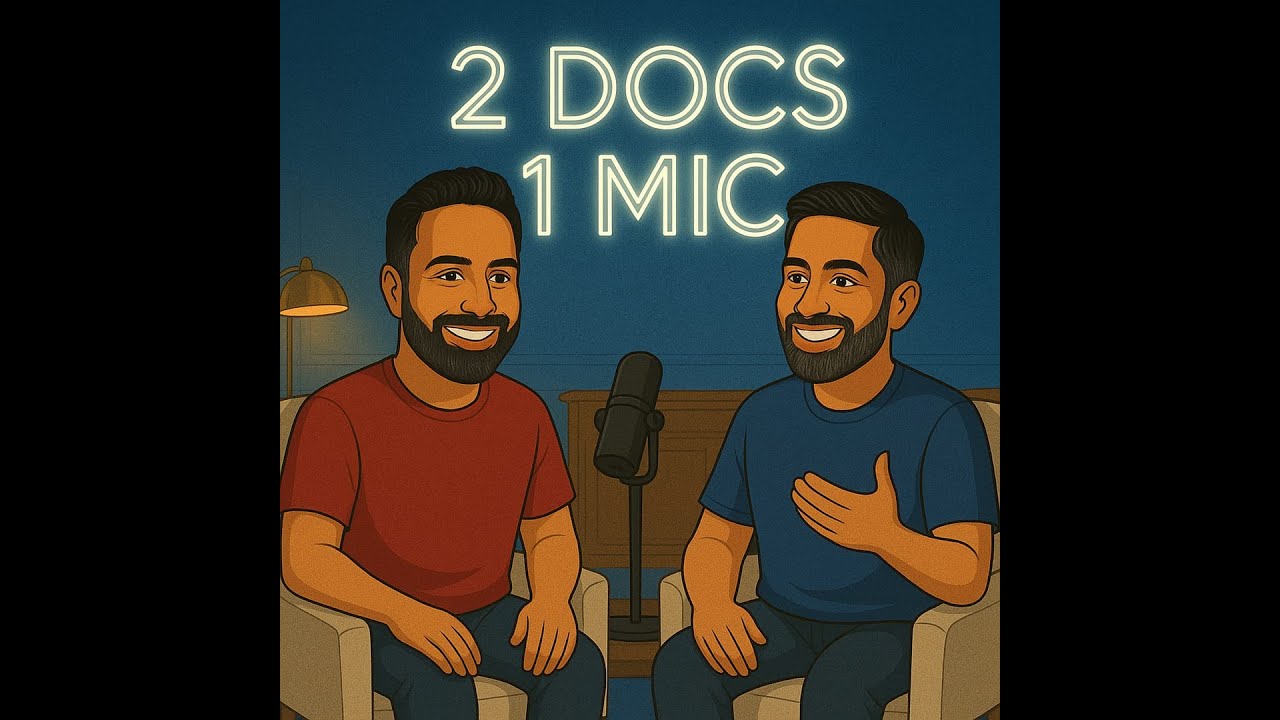
Your hosts